Showing posts with label pcb. Show all posts

Tuesday, December 11, 2012

Superfund Site, But No Cleanup Necessary


By: Duane Craig
Perhaps in a case of the federal government bending over a bit too far at a state’s request, the Portland Harbor Oil Superfund site may not get a cleanup with federal dollars, according to this article. The reason is because after closer scrutiny, the pollution isn’t serious enough, and the local fish aren’t plentiful or old enough to warrant a cleanup.

An oil spill from storage tanks owned by Harbor Oil in 1974 was the first warning shot of a minor disaster unfolding. That incident killed the fish in Force Lake. Then, just five years later, a massive fire melted five oil storage tanks. Nearly 100,000 gallons of petroleum products spilled into the lake and fouled its wetlands.

Polychlorinated biphenyls, or PCBs, are the biggest threat to life at the 19-acre site with levels at 2,000 parts per billion. However, the current owner has paved over the contamination, effectively capping it to prevent precipitation from disbursing it. The lake’s sediment has been found to have PCBs at 80 parts per billion. The EPA believes the greatest threats to humans now lie with eating fish from the lake because PCBs are classed as bioaccumulative, meaning they concentrate in living tissue.

Wednesday, October 17, 2012

Upstate New York Residents Question Environmental Quality of Legacy Site

By: Duane Craig

Regardless of what Watertown, N.Y. residents might want, the state’s Department of Environmental Conservation says it won’t be doing any more environmental testing at the former New York Air Brake site, according to this article.

Besides residents, public officials are also concerned about high cancer rates and other illnesses that affect the north side of that community. Of increasing concern, is the possibility of vapor intrusion into nearby homes from high levels of chemicals that have made their way into the soils beneath the homes. DEC says it won’t be monitoring any indoor air quality in the homes, however monitoring does continue at the site every year.

Reassurances from the DEC largely fell on deaf ears at a recent neighborhood meeting that was also attended by environmental activist Erin Brockovich. One resident who orchestrated the meeting has been disabled by a neurological disease and another resident who attended claimed he remembers dumping chemicals from the facility’s operations.

Those operations started in 1876 when Eames Vacuum Brake Co. was founded as a vacuum break manufacturer. It was making a new kind of pneumatic brake for railroads operating in the area, according to this historical account. In 1919 the company had 7,000 employees making horse-drawn cannons and then during World War II it was busy making tanks and military hardware. General Signal Corp. bought the operations in 1967 and by 1980 had 2,200 employees making parts for aerospace and defense contracts, heavy machinery and farm equipment. The business’ makeup gets a little murky after that as a portion of it was purchased by a German company that eventually moved its operations to North Charleston, S.C. Other portions of the business still owned by General Signal continued to operate in the area as a foundry and maker of railroad car brakes.

General Signal admitted in 1988 that it disposed of toxic chemicals in a landfill on the site. Ten years of testing and cleanup followed, so that today, drainage from the landfill collects in a pond where the water is treated before it is released, according to this article. At one time, toxic chemicals such as polychlorinated biphenyls, or PCBs, as well as trichloroethylene, or TCE, were present in two creeks that flow nearby. People in the area wonder today how much of those materials remain in the soils and continue to migrate to adjacent lands.

Wednesday, August 8, 2012

Michigan Canals Still Hide Their PCB Sources


Two canals in Michigan are dangerously contaminated with polychlorinated biphenyls, or PCBs, according to this advisory. The seriousness of the contamination was underscored by the Michigan Department of Health when it wrote in the advisory that the PCB levels were 2,000 times higher than those typically seen in fish taken from Lake St. Clair.

The advisories cover the bottom feeders -- carp and catfish. That’s because they feed closest to the contaminated sediments and have high concentrations of body fat to store the PCBs. The canals affected are the Lange and Revere off Lake St. Clair.

Residents who live along the canals are concerned about how long it’s taking to find the source of the contamination. The Environmental Protection Agency has been sampling and cleaning up problem areas for years but hasn’t been able to determine just where the contamination originated. PCBs have been linked to cancer and are a persistent pollutant, meaning they accumulate in the environment and in the tissues of living things.

By: Duane Craig

Tuesday, April 24, 2012

Pickens County Wants More Than EPA Testing for PCBs

By: Duane Craig

The Pickens County Council in South Carolina is questioning whether the Environmental Protection Agency can effectively manage an old PCB contamination of Twelve Mile Creek, according to a report in IndependentMail.com.

The doubts stem from EPA plans to do some follow-up testing along a couple of miles of the creek. The county, however, hired its own consultant hydrologist, and he says the entire 24 miles needs to be tested. Apparently, landowners want some assurance that the land they own along the creek is not contaminated with polychlorinated biphenyls, or PCB. Without tests showing there is no contamination, they expect their property values will drop.

From 1955 to 1977, a capacitor manufacturer dumped 400,000 pounds of PCB in the area, leading to Superfund designation in 1990. Get the whole story at the link above.

Friday, March 9, 2012

Metal Recycling Operation Spills Contaminants

 Author: Duane Craig

The Environmental Protection Agency put a metal recycling company on notice for allegedly contaminating San Francisco Bay with lead, mercury, PCBs, copper and zinc, according to several news reports.

The company shreds about 300,000 automobiles each year, as well as appliances and other metal products, and loads them onto ships that go to Korea and China so they can be made into new products. It is believed the pollution resulted from debris that fell off a huge conveyor belt used to load the oceangoing ships. Nearby, a 140-acre property that was to be transferred to a nearby wildlife refuge has also been contaminated. A fluffy gray material was reported blowing from the metal recycling site across the nearby land and into waterways.

The company involved, Sims Metal Management, has previously been in the news for a fire five years ago that sent a plume of black, polluted smoke across Silicon Valley. The pollutants this time were discovered in the soil and in the sediment near Redwood Creek. Mercury exceeded the protective levels by 110 times, and copper exceeded the levels by 86 times. Worse yet, polychlorinated biphenyls, or PCBs, were recorded at levels 10,000 times the acceptable amount.

You can read more about it at The Kansas City Star, the Sacramento Business Journal and Environmental Leader

Wednesday, December 14, 2011

Ignorance Serves as Path to Unintentional Contamination

By: Duane Craig


There are few better examples of how ignorance enables widespread contamination than a tale about Monsanto, National Cash Register Company, the paper industry and polychlorinated biphenyls, or PCBs. This story started in 1957 and is still playing out across the country. Recently, new evidence of PCB contamination on the rise comes from Portage Creek in Kalamazoo, Michigan, according to this report in MLive.com.

PCB contamination on the rise in Kalamazoo


Four paper mills operated in that area, and today an 80-mile stretch of the river is part of the Superfund cleanup known as the Kalamazoo River Project, according to this background paper from the Environmental Protection Agency.

There are nine places along Portage Creek where PCB levels have increased from their 1993 level of 79 parts per million to 590 parts per million, and those particular places are known as hot spots. It is thought that erosion over the years moved the material and concentrated it in those hot spots. The cleanup will focus on about two miles of the creek and will involve a small portion of Axtell Creek from John Street to Portage Creek as well. The work area begins at Alcott Street and continues to where the creek meets the Kalamazoo River at E. Michigan Avenue.

In 1966, PCBs showed up in Swedish fish and wildlife so in 1967 the U.S. Food and Drug Administration started testing this country's food supply for PCBs and found them in fish, eggs, milk, poultry, grain and cereal. Apparently, a particular type of packaging called greyboard, used to package cereal, had the highest concentrations of 433 parts per million. The greyboard was widely being made from recycled carbonless copy paper and carbonless paper was being made by the National Cash Register Company using a Monsanto product called Arochlor 1242. Archlor 1242 contained a cocktail of PCBs with 42 percent chlorine, according to this study. While NCR was the sole marketer of the carbonless copy paper it also licensed other paper mills in Wisconsin to make the product.

But, there was also another way PCBs were entering the environment from the paper industry. Paper mills in general were found to have PCBs higher than background levels in their wastewater and the culprit, once again, was carbonless paper. In 1977 there were nearly 800 paper mills using recycled wastepaper and those mills were using about 12,000 gallons of water to create each ton of paper. That water was flowing out to the rivers and streams or being disposed of as sludge in landfills. It was finally determined the PCBs were concentrating more in solids than they were in water, so as water carried the PCB-laden solids the solids were often distributed in clumps as sediment. Where that happened the PCB concentrations rose rapidly.

NCR stopped making the carbonless paper in 1971, but forty years later the world is still dealing with the legacy of unintentional contamination born from ignorance.

Monday, December 12, 2011

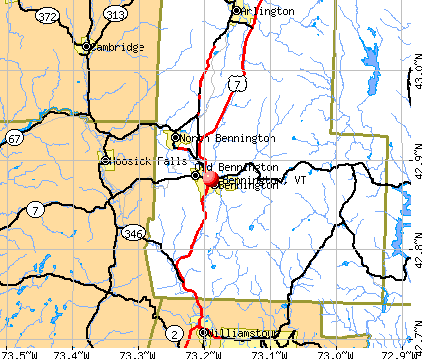
Whoops, TCE and PCE on the Move Again at Bennington Superfund Site

By: Duane Craig

A very deep trench is proposed to subvert the movement of contamination from a former landfill in Bennington, Vermont, according to this article in the VTDigger.org. The landfill is also a formerly active Superfund site with remediation completed in 1999, according to the Environmental Protection Agency.

Groundwater contamination found in Barney Brook

Trichloroethylene, or TCE, and tetrachloroethylene, or PCE, have escaped from the landfill which was previously capped and adorned with a soil vapor extraction system. Apparently the groundwater flow changed and some contamination has been found in a tributary to Barney Brook. For six years in the late 1960s and early 1970s, the landfill was a dumping place for industrial wastes from local companies. Those wastes included polychlorinated biphenyls, or PCBs, organic solvents and lead. These wastes were dumped into a lagoon that was not lined to prevent absorption into the soil.

In 1976, a system was installed to lower the groundwater beneath the landfill by carrying it away to an unlined, pond area. Ten years later PCBs, lead, arsenic, benzene and ethylbenzene were flowing into the pond, according to this EPA report.

The new trench will be 25 feet deep and 200 feet long. Because it goes down to impervious soil it is expected to catch the contaminants. The bottom of the trench will be filled with sand and iron shavings to break down the contaminants and stop their movement.

Tuesday, September 28, 2010

NYC's Newtown Creek Declared Superfund Site

September 27, 2010 - The Environmental Protection Agency today declared toxic Newtown Creek a federal Superfund site after a series of soil and water samples were tested over a three-month period in 2009. Superfund sites are former industrial areas so polluted they are determined to need federal funding for cleanup. The creek, which serves as the border between Queens and Brooklyn, joins the Superfund list as one of seven added today by the EPA.

Testing revealed the presence of pesticides, metals, polychlorinated biphenyls (PCBs), and volatile organic compounds (VOCs). PCBs are thought to cause a range of health issues in humans, and VOCs can cause respiratory, allergic, or immune problems.

Citing the toxic site as one of the most polluted water bodies in the country, officials including local Congress members Anthony Weiner and Nydia Velazquez pushed the EPA to test the waterway, which flows partly under the north end of Bushwick as English Kills.

More...

Monday, September 27, 2010

Cleaning Up A Dirty River And a Legacy

September 24, 2010 - In many ways, the Housatonic River has borne most of the brunt of General Electric’s legacy in this city.

The river is filled with cancer-causing chemicals. For nearly four decades, GE used chemicals such as polychlorinated biphenyls, or PCBs, at its transformer plant on the banks of the river.

What's more, GE gave contaminated soil to people in Pittsfield — to use in their lawns and gardens.

The surrounding neighborhoods are filled with people whose families have been touched by the contamination. People such as former GE worker Dave Gibbs.

"My mom died of breast cancer. She worked at GE," Gibbs says.

"My uncle died of pancreatic cancer and he used to run the swamp which feeds the Housatonic. My sister, in her early 40s, had both her breasts cut off, because the doctor told her it would cut her chances in half. She worked at GE. There are just stories like that all through the neighborhood."

More...

Westlawn, MA Residents Learn of Contamination

September 24, 2010 - Contaminants at the Parker Street waste site extend onto the Westlawn housing development but pose no imminent hazard to people who live there, environmental and health officials told residents at a meeting at Keith Middle School Thursday night.

But as Jacqueline Torres sat, confused, after the brief presentation, she illustrated a problem that's much easier to spot: officials who say people are in no immediate danger and residents who don't feel safe.

"Like any other parent, I'm worried — worried and concerned," said the mother of three, who said she has a 21-year-old daughter at Westlawn in remission from cancer of the lymph nodes. "She went through so much with the cancer, I don't want her to get sick because of any other reason."

More...

Thursday, September 2, 2010

EPA to MI Residents: No Fix Yet For Ten Mile Drain

August 27, 2010 - At a public meeting hosted Thursday by the Environmental Protection Agency, St. Clair Shores residents wanted to know when a PCB contamination in canals and storm drains in their neighborhood finally would be cleaned up.

But the best EPA officials could tell them was that there was a good chance that the EPA would include the Ten Mile drain project on its National Priorities List of Superfund sites when it releases the new list early next month.
Colleen Moynihan, an EPA remedial project manager, said being on the list would mean lots more money to investigate the cause of the contamination and to clean it up.

"Without finding a source, we are not going forward selecting a cleanup plan," she said.

For many of the estimated 90 people at the meeting at Lakeview High School, it wasn't anything new.

"I'd like to see some kind of action, a time frame on it, because this has been going on for nine years," Bruce Terwilliger said.
PCBs, or polychlorinated biphenyls, are industrial compounds that cause cancer and were banned in the 1970s.

More...

Monday, August 23, 2010

NY Schools Treated for PCB Still Show Signs of Contamination

August 19, 2010 - Three schools that were treated for PCB contamination in the past year still contain PCB amounts that are higher than federal guidelines for what is acceptable, the Department of Education said.

The results of the tests on the schools—PS 199 in Manhattan, PS 178 in the Bronx and PS 309 in Brooklyn—are part of an agreement between the DOE, the city's School Construction Authority and the federal Environmental Protection Agency.

PCB, or polychlorinated biphenyls, is considered a harmful material, but the EPA said that the potential presence of PCBs in schools and buildings should not be a cause for alarm. The three schools were the only ones of the more than 1,500 schools tested in New York City as part of the three-agency agreement.

More...

Monday, August 16, 2010

Homeowners Want Say in Scofieldtown, CT Cleanup

August 15, 2010 - North Stamford residents who have contaminated wells asked a Bridgeport judge to force the city and state to involve them in confidential negotiations on cleaning up hazardous contaminants at the former landfill site at Scofieldtown Park.

On Friday, North Stamford Concerned Citizens for the Environment, a residents group, filed an injunction request in state Superior Court in Bridgeport to allow it to take part in talks between the city and the Department of Environmental Protection to establish an investigation and a cleanup plan for toxic contamination at the park. The land served as a residential and industrial dump site from the 1930s to 1970s.

A federal report in 2008 that found soil contaminated with PCBs and other toxins at the park prompted closure of the facility in 2009.

More...

Wednesday, July 21, 2010

PCB cleanup begins in Natick, MA's Pegan Cove

July 20, 2010 - A large ring of yellow buoys floats on the surface of Pegan Cove, marking the area where contractors have started removing sediment contaminated with PCBs, left by an accident at the Soldier Systems Center 30 years ago.

The PCBs were found in the section of Lake Cochituate just to the east of Natick Labs. They came from a transformer explosion in 1980 and got into the lake through a storm drain, said Jim Connolly, restoration program manager for Natick Labs.

The cleanup was triggered when authorities found unsafe levels of PCBs in fish caught in Lake Cochituate. Kaltofen, an environmental engineer, said the fish are his biggest concern.

"The fish from Lake Cochituate are really nasty," Kaltofen said. "I have been to toxic sites all over the country and very few have anywhere near the level of PCBs as the ones at Lake Cochituate."

While there are signs warning people not to eat the fish, and mailings have gone out to nearby homeowners, some still catch and eat fish from the lake.

More...

Friday, June 25, 2010

NC Marines Fight For Help After Years of Bad Water

June 21, 2010 - Former Marine Cpl. Peter Devereaux was told about a year ago that he had just two or three years to live.

More than 12 months later, at 48, he still isn't ready to concede that cancer is going to kill him. He swallows his pills and each afternoon he greets his 12-year-old daughter, Jackie, as she steps off her school bus in North Andover, Mass.

The Department of the Navy says more research is being done to connect ailments suffered by Marines such as Devereaux who served at Camp Lejeune, N.C., and their families who lived there to decades of water contamination at the base.

Meanwhile, however, the Department of Veterans Affairs has quietly begun awarding benefits to a few Marines who were based at Lejeune.

More...

Tuesday, June 15, 2010

Investigators seek source of PCBs in Spokane River

June 14, 2010 - Industry has flourished along the banks of the Spokane River for more than a century. So, perhaps it’s no surprise that high levels of PCBs show up in rainbow trout and other fish.

Once found in everything from lipstick to cable insulation, PCBs were banned more than 30 years ago because of their link to cancer and other health problems. But the toxic compounds are still flowing into the river through storm water runoff.

Tracking the pollution’s source is part of a $980,000 "Urban Waters Initiative" at the Washington Department of Ecology.

More...

Friday, May 14, 2010

More TCE-polluted wells found in Limerick, PA township

May 14, 2010 - More chemical contamination has been discovered in residential wells in the township, state officials confirmed Thursday.

Lynda Rebarchak, a spokeswoman for the southeast office of the Pennsylvania Department of Environmental Protection, confirmed that well tests discovered unsafe levels of the chemical trichloroethylene, or TCE.

The initial tests were conducted by the Montgomery County Health Department, which notified the DEP on April 13.

Rebarchak confirmed that unsafe TCE levels were found in eight wells near the intersections of Country Club Road in Ridge Pike and Township Line Road and Graterford Road.

"It's a brand new site," said Rebarchak. The DEP is calling it the Landis Creek site.

Currently, the state is taking its own samples and conducting tests on those samples to confirm the health department's findings, Rebarchak said.

More...

Friday, May 7, 2010

Brooklyn Park Poses Health Risk

May 7, 2010 - The grassy fields of a park in the gentrifying Red Hook section of Brooklyn are contaminated with PCBs at a level 110 times what New York environmental agencies consider safe, according to court records filed in a lawsuit against bankrupt Chemtura Corp.

Linked to liver cancer, low birth-weight and loss of motor skills, PCBs pose a threat to park visitors and nearby residents, said Judith Schreiber, chief scientist in the state attorney general’s environmental bureau.

More...

Monday, December 14, 2009

PCB hearing in Michigan provides no answers for residents

December 11, 2009 - After years of watching their home values drop and their neighborhoods suffer under the stigma of having environmental issues, more than 130 St. Clair Shores, Michigan residents came looking for answers at a public hearing Thursday night.

They left, however, without an answer to the question that has dogged the investigation from the beginning: where is the contamination coming from?

More...

Tuesday, June 23, 2009

Church in New Bedford, MA seeks answers about pollution

June 23, 2009 - City testing in New Bedford, MA around a church has found sharply elevated levels of toxic chemicals, including PCBs, benzopyrene compounds, cadmium chromium, lead and others.

The church is part of extensive development that exists on the 101-acre site that was formerly the Parker Street dump. Besides the new middle school, the land includes the adjacent high school and athletic fields, and an entire residential neighborhood.


More...