Showing posts with label north carolina. Show all posts

Friday, April 26, 2013

Lack of TCE Warning Has Residents Steamed


By: Nathan Lamb

A recently discovered cluster of contaminated wells has residents of Wake Forest, North Carolina asking why they weren’t warned about the problem in 2005, according to this NBC news story.

Environmental Protection Agency (EPA) testing over the past year has discovered the carcinogen trichloroethylene (TCE) in 21 wells across a 500-acre area around Stony Hill Road in the town of Wake Forest.

While the EPA has installed water filters to alleviate the problem, several residents were outraged to learn that the state discovered TCE contamination in a neighborhood well in 2005, but never alerted them.

The contamination is thought to date back 10 years, when TCE was used to clean circuit boards in a neighborhood shed.

The North Carolina Department of Environment and Natural Resources (DENR), which made the initial discovery, compiled an internal report saying the extent of the contamination was unclear and that other wells in the area should be tested.

A DENR spokesperson said the problem appeared to be confined to the single residential well, adding the agency has finite resources and higher-risk sites that took priority.

Last summer, the DENR advised area residents to get their water tested, and sought assistance from the EPA, which tested roughly 100 wells.

TCE is an industrial solvent that’s often used for degreasing. Improperly disposed of, it can create harmful vapors and migrate through groundwater.

Located roughly 18 miles northeast of Raleigh, Wake Forest has a population of roughly 31,000 people.

Wednesday, April 3, 2013

Power Plant Facing Legal Action for Contamination


By: Nathan Lamb

A North Carolina power plant accused of leaking waterborne pollutants is facing legal action from environmental officials, according to this story from the Citizens-Times newspaper.
 
A recently filed lawsuit from the N.C. Division of Water Quality alleges that the Progress Energy plant in Asheville is leaking toxic chemicals into groundwater and the nearby French Broad River.

Officials termed the contamination a threat to public health and water resources, and asked the courts to require the company to assess the cause and extent of the problem within 120 days. The suit also requests additional testing for groundwater and private wells nearby.

The state compelled the utility to install monitoring wells at the site in 2009, and the complaint cites test results from monitoring wells, along with two incidents where inspectors discovered contaminants migrating from coal ash ponds to the nearby river.

Specific contaminants included thallium, a toxic metal often associated with coal burning operations. According to the EPA, effects can include nerve damage, gastrointestinal irrational, damage to the kidney, liver, testicular tissue and hair loss.

Duke Energy, which owns the plant, issued a statement saying it has complied with its environmental permits.

Located roughly 120 miles west and north of Charlotte, Asheville is a city of roughly 83,000.

Thursday, March 21, 2013

Contamination Study May Extend Veteran Benefits


By: Nathan lamb

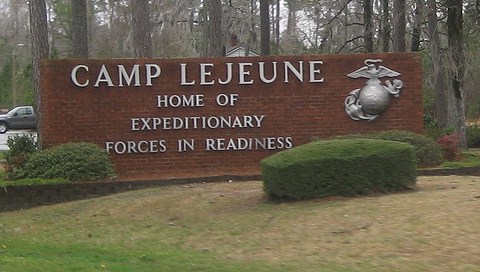
A recent study has shed new light on long-standing water contamination issues at a North Carolina military base—and that could help veterans claiming adverse health impacts from their time at that post.

The study indicates that drinking water at Marine Corps Base Camp Lejeune had elevated levels of carcinogens for more than 60 years, according to this story from the Kansas City Star.

At peak levels, the contaminants were 150 times higher than safety standards—and the report estimated up to one million service personnel and their families may have been exposed while at the base.

A special law enacted in 2012 provides screening and health care for those at the base from 1957 to when the contaminated wells were closed in 1987—but the study suggests the problem could date back far as 1948.

Federal lawmakers are calling for additional hearings on the issue and a bill has been filed to extend coverage back to 1953, which is thought to be when the contamination first exceeded health standards, according to this story from the Washington Post.

The contaminants include trichloroethylene (TCE), an industrial degreaser that can cause a variety of short- and long-term health impacts. The other contaminants were from dry-cleaning and fuel, according to the Marine Corps, which as recently as last year claimed there was insufficient evidence to link health problems to the drinking water.

Retired Marine Master Sergeant Jerry Ensminger has long alleged the connection between the camp water and health impacts. He was stationed at Lejeune and lost his 9-year-old daughter to a rare leukemia in 1985. Ensminger credited advocates like himself for bringing the issue to light.

Tuesday, October 30, 2012

The Carolinas Challenged by Water Woes

By: Duane Craig

Nearly 100 homes in southwestern Cumberland County, N.C., with wells threatened by contamination, will be able to connect to a public water supply by spring 2013, according to this article. The county is installing a water line that will provide connections for the affected residents using a Clean Water Revolving Loan from the state.

The project has been five years in the making even though the contamination causing the problem has been known about for 20 years. Benzene leaking from tanks at a long-closed gas station is considered to be the culprit. Surprisingly, only 40 of the homeowners surveyed said they were in favor of hooking into city water supplies.

Delays in getting the project started ranged from disagreements with neighboring counties on providing the water, requests for federal money being declined, and voters turning down the project because it also included Gray’s Creek.

Nearby in South Carolina, a public water company is pressuring two large, local businesses to help fund a filtering system it now has to install to clean up contamination in its water system, according to this article.

Named in a $450 million lawsuit brought by Alligator Rural Water and Sewer are McLeod Farms and Mar Mac Wire. The utility company says it has evidence the two businesses are the sources of three chemicals polluting the water supplies near McBee. Two-thirds of the wells used by the McLeod peach farm are contaminated, according to the state’s environmental department. News reports are unclear about Mar Mac Wire’s contribution to the problems. The United States Geological Survey is tracking the contamination to determine where it’s originating and how long it’s been present. The report is expected to be completed sometime in 2013.


Tuesday, January 31, 2012

Asheville's Superfund Site Seeks Millions From PRPs

By: Duane Craig

The Environmental Protection Agency has billed two potentially responsible parties $6.5 million to cover the agency's costs to date in remediating the CTS of Asheville National Priorities Superfund site at 235 Mills Gap Road in Asheville N.C., according to an article in the Citizen-Times.

The site is widely contaminated with solvents such as trichloroethylene, or TCE, and residents have linked the contamination to cases of cancer in children. The EPA is currently monitoring 105 private water wells in the area, and in the past the agency paid to connect residents to municipal water when a spring and five private water wells turned out to be contaminated with not only TCE but also petroleum compounds, according to the EPA's report on the site.

Ashville Superfund site still contaminated with trichloroethylene

Residents are tired of the time it has taken to get cleanup actions started, and they welcomed the news of the EPA's latest efforts to get the two companies involved to pay up. Contamination is expected to lie below a 79,000-square-foot deteriorating building that is used by gangs, drug dealers and their users. The EPA has also been conducting vapor intrusion assessments and has been pressuring the responsible parties to plan and implement remediation tactics. A soil vapor extraction operation has so far removed 6,000 pounds of solvents from soils just above the water table.

Friday, December 2, 2011

Marine Corps Removes Contested Contamination Pamphlet

By: Duane Craig

USMC pulls controversial water contamination booklet

According to an ENCToday.com story, The United States Marine Corps has taken down a document on its website that was contradictory to the real contamination that affected its water system over many years.
Its action however only comes after calls for its removal by the Agency for Toxic Substances and Disease Registry, and three North Carolina legislators, and then only after months of delay. Now, the corps says the document is only down temporarily while it is updated and revised so that it will "provide decision makers and the public with accurate and sufficient information about Camp Lejeune so that decisions that are made are informed by the science."
This story goes back a long ways and you can pick up background on it here, here, here and here. This latest news revolves around a 33-page pamphlet that went to every congress person and was then placed on the Marine's web page dedicated to the Camp Lejeune water system. The pamphlet said their were no conclusive results about the chemicals in the Camp's water and that further study wouldn't do any better. This was stated despite the fact that benzene contamination was discovered.
Some people are disappointed enough to request the corps to send mailings to all the people in the camp's water registry alerting them to the erroneous information since many of them may not be aware they were misinformed.

Wednesday, July 14, 2010

Off Target: CTS Letter Prompts EPA Inquiry Into Neighboring NC Businesses

July 13, 2010 - Chapel Hill Church Road resident David Bradley, who’s seen his own well contaminated, plans to fight the EPA, at the request of CTS, investigating his small home insulation business as a source of contamination.

Ironically, Bradley is one of the very people directly affected by the ongoing contamination (see "Fail-safe?" July 11, 2007, Xpress). His home was placed on city water last August after TCE, a suspected carcinogen, was found in his family’s well at a concentration of 840 parts per billion — more than 168 times the maximum the law allows in drinking water. (See "The Green Scene," Sept. 9, 2009, Xpress.)

Bradley says he’s baffled and angry at the request, noting that he doesn’t manufacture the insulation he installs, and he stores it in Fletcher, far away from the site the EPA is asking about. "I don’t keep insulation here — I just work out of my house," Bradley explains. "I don’t make the insulation, I get it from distributors: I just install it. I don’t know what they’re trying to say. I just figure since they found so much of that stuff in my water, they’re trying to blame me for screwing the water up."

More...

Thursday, July 8, 2010

EPA Targeting NC Resident with Contaminated Well

July 6, 2010 - David Bradley, 61, runs an insulation business out of his home on Chapel Hill Church Road, near the contaminated former CTS of Asheville site. Now, based on a request from CTS, the Environmental Protection Agency has demanded that Bradley give out information on his home as a possible source of contamination or face stiff fines.

"The United States Environmental Protection Agency is currently investigating the release or threatened release of hazardous substances, pollutants or contaminants, or hazardous wastes on or about the above-referenced Sites," a June 25 letter to Bradley and his company reads. "Compliance with the Infornation Request is mandatory. Failure to respond fully and truthfully to the Infornation Request within thirty (30) days of receipt of this letter, or to adequately justify such failure to respond, can result in an enforcement action by EPA."

More...

Friday, June 25, 2010

Tanks Leaked Fuel Near Camp Lejeune, NC Well

June 24, 2010 - Federal scientists studying the history of water contamination at Camp Lejeune, N.C., have learned of another source of leaking fuel - this one less than a football field away from a drinking well that once served thousands of Marines and their families.

The well was closed in December 1984 after benzene was found in the water.

The source of contamination that scientists now are exploring was once an on-base refueling station within an area of the Marine base known as Hadnot Point. The refueling facility, Building 1115, contained seven underground storage tanks that ranged in size from 1,000 to 5,000 gallons.

The extent of the contamination on the Marine base - and its sources - are important to federal scientists at the Agency for Toxic Substances and Disease Registry, an arm of the Centers for Disease Control and Prevention in Atlanta, who are trying to understand the health effects of the contaminants in the base's water.

More...

NC Marines Fight For Help After Years of Bad Water

June 21, 2010 - Former Marine Cpl. Peter Devereaux was told about a year ago that he had just two or three years to live.

More than 12 months later, at 48, he still isn't ready to concede that cancer is going to kill him. He swallows his pills and each afternoon he greets his 12-year-old daughter, Jackie, as she steps off her school bus in North Andover, Mass.

The Department of the Navy says more research is being done to connect ailments suffered by Marines such as Devereaux who served at Camp Lejeune, N.C., and their families who lived there to decades of water contamination at the base.

Meanwhile, however, the Department of Veterans Affairs has quietly begun awarding benefits to a few Marines who were based at Lejeune.

More...

Thursday, April 22, 2010

Protestors Want Cleanup of Former North Carolina Plant

April 22, 2010 - Protesters gathered beside the rubble of the former N.C. Finishing Plant (later called Color-Tex) on Wednesday afternoon, urging a cleanup of the site with signs claiming it is a "Hazardous Waste Site."

Officials from the Environmental Protection Agency, N.C. Department of Environment and Natural Resources and Rowan County Emergency Management visited the site Wednesday. The protest, led by Doug and Bonnie Thomas, was part of an effort to encourage agencies to get to work at the site. Doug Thomas, who was contracted to demolish the buildings two years ago, said he knows of barrels filled with toxic chemicals that are buried under the debris. "I saw they were burying barrels out there and reported it," he said. "People are just tired of this, and we just want it to get cleaned up."

More...

Thursday, January 21, 2010

Chemical Contamination Affects North Carolina Churchgoers

January 20, 2010 - Eight hours a week for more than two years, parishioners of the Word of Faith church in Durham flocked to a makeshift sanctuary inside a rented building near downtown and gathered for fellowship, prayer and healing. What the churchgoers did not know at the time, state officials believe, is that while they celebrated and sang in praise, the air they breathed was contaminated with the vapors of a toxic dry cleaning solvent—a probable carcinogen—that had seeped into the ground for years.

More...

Wednesday, January 13, 2010

Dry Cleaning Chemicals Cause Problems Decades Later

January 8, 2010 - State health officials are working with a Durham property owner to try to clean up decades of chemical contamination on the site of an old dry cleaner that closed in 1975.

The problem is a solvent called tetrachloroethylene (nicknamed "perc") which every dry cleaner used to pour down drains, and wasn't found to be dangerous until the 1980's. It can cause cancer, respiratory problems, neurological disorders and other problems.

It's a problem not just for the individual property, but neighbors as well.

More...

Tuesday, December 1, 2009

Water contamination at North Carolina Military Base cause of long term suffering

November 29, 2009 - Ed Bauries shares a bond with other Marines, their children, their widows from across Florida - and the nation. Their shared bond is the water at Camp Lejune, North Carolina. Water that they bathed in, cooked with and drank, decades ago while stationed at the base. Water that now appears to have been tainted with some of the most dangerous chemicals in the world.

Hundreds of thousands lived at Camp Lejune from the 1950's through the 1980's, where it is now alleged that the drinking water was contaminated from leaking underground storage tanks, the dumping of waste and a toxic spill from a nearby dry cleaners.

More...

Wednesday, September 2, 2009

Groundwater Causing Sickness in North Carolina Town

September 1, 2009 - Residents living within 200-300 yards of Moog Components Group say that even though they are now hooked up to city water, they still suffer from hazardous chemicals in the ground.

After it rains, a dark grey to white substance comes out of the ground into puddles of water, sometimes bubbling. “I would like to see them be truthful with us instead of lying or telling us what we want to hear,” one resident said. “I would like to see them buy our property or remove the dirt.”

More...

Wednesday, July 1, 2009

EPA Lists "High Hazard" Sites

June 30, 2009 - The Environmental Protection Agency has released a list of 44 coal ash storage sites that are a potential threat to surrounding communities. North Carolina has the largest number of these so-called "fly ash ponds" like the one that breached in Tennessee in December burying homes and contaminating water.

After the TVA dam broke near Kingston, Tennessee on Christmas Eve, the EPA called for a review of other such dams around the country. They hold the ash and toxic left-overs of coal power plants and, until now, the list of such sites was not made public.

More...

Monday, June 1, 2009

Camp Lejeune vets suffer from drinking water contamination in North Carolina

May 31, 2009 - Camp Lejeune, a sprawling Marine base on the North Carolina seaboard, is the site of what some scientists call the worst public drinking-water contamination in the nation's history. Its water wells were tainted with cancer-causing industrial compounds for 30 years, ending in 1987.

An estimated 500,000 to 1 million people — including Marines and family living on base housing — drank, bathed and cooked using that fouled water.

Among the chemicals detected in high concentrations at Camp Lejeune are a metal degreaser, trichloroethylene (TCE) and a degreaser and dry-cleaning agent called tetrachloroethylene (PCE).

More . . .

Monday, April 27, 2009

Contaminated Well Leaks into NC Neighborhood

April 27, 2009 - Residents near the old CTS plant in Asheville, North Carolina got a scare after a contaminated well flowed into their neighborhood. One property owner said that her kids playing outside last week were the first to discover the problem in her yard, and she says that "It scares me that my dog was out there trying to drink the water." The water recently tested 11-hundred parts per billion for the industrial solvent trichloroethylene , or TCE.

More...

Tuesday, March 3, 2009

The far-reaching, untold effects of contaminated water in Jacksonville, N.C.

January 11, 2009 - Over four decades, an estimated 500,000 citizens and soldiers were exposed to drinking water tainted by chemicals used at a dry-cleaning establishment near the 246-square-mile training base.

The government has known about the water pollution for more than a quarter-century. But Partain, Covella, Anderson and many others impacted by the contamination have only become aware of Lejeune's problems during the past couple of years, usually from media reports or word of mouth.

More . . .

Thursday, October 23, 2008

Pesticides from old peach orchards have tainted wells in North Carolina

September 21, 2008 - Many of the peach orchards have faded away, but their legacy haunts the people who claim the sandy soil. Their groundwater is contaminated by pesticides that may cause cancer.

Tests have found 117 tainted wells in Montgomery, Richmond and Moore counties in the past year, 77 of those at unsafe levels. The number continues to grow as alarmed residents have their water analyzed.

More . . .