Showing posts with label cancer. Show all posts

Wednesday, January 2, 2013

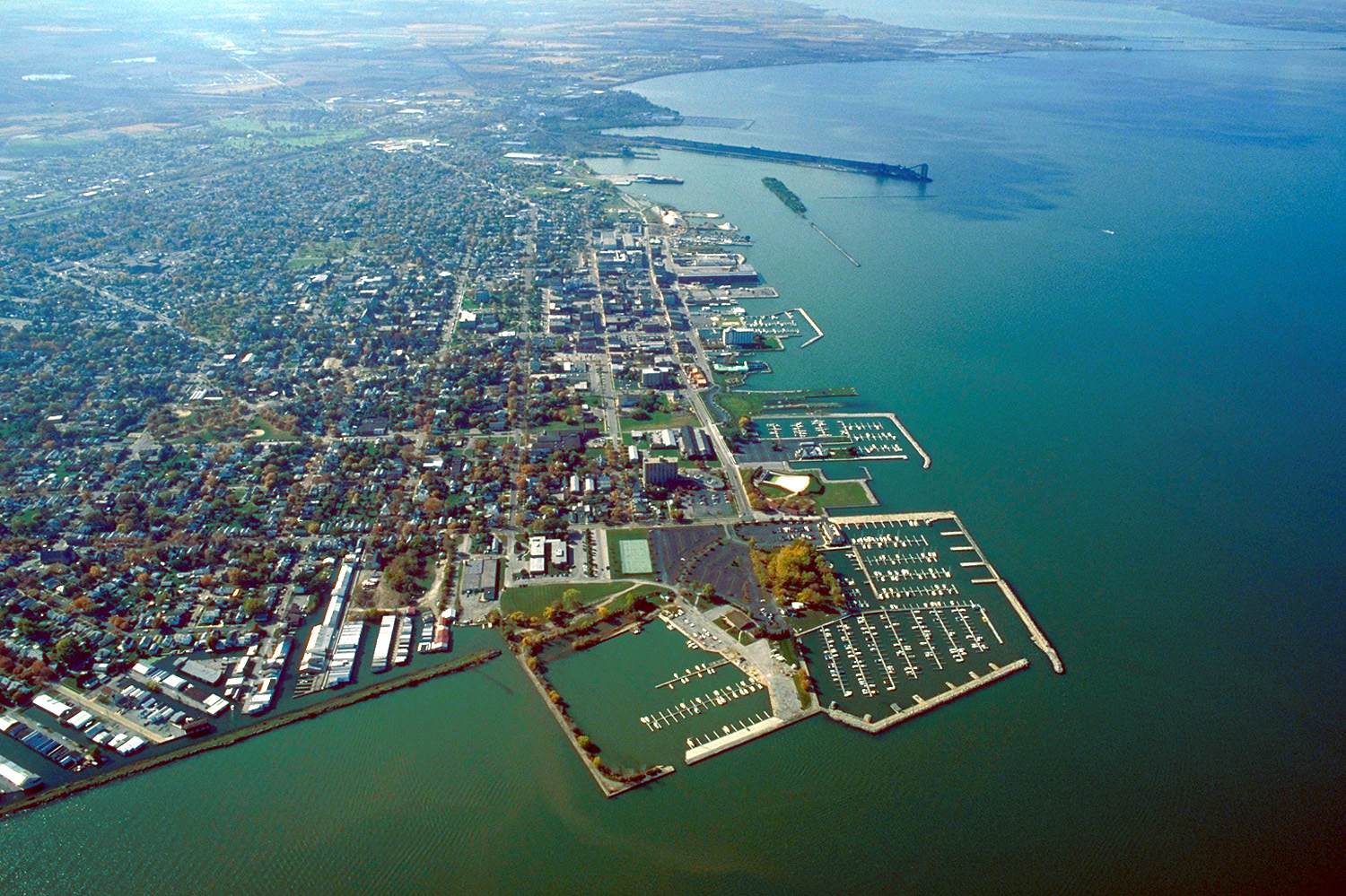
Old contaminants shut down Cleveland park

By: Nathan Lamb


Industrial waste dumping from the early 20th century is the primary suspect behind recently discovered contaminants that have shut down a popular city park in Cleveland, according to this story.

The City of Cleveland started renovations on the 12.5-acre W.C. Reed Playfield over the summer, but that plan was put on hold after soil tests discovered elevated levels of polynuclear aromatic hydrocarbons (or PAHs) on the site.

PAHs are typically a byproduct of petroleum processing or combustion and can be highly carcinogenic at relatively low levels, according to the U.S. Geological Survey website.

The State of Ohio requires remediation of recreation areas where PAHs pose a cancer risk greater than 1 in 100,000. PAH levels at the park are measured at 5 in 100,000, with the primary concern that children could accidentally eat or inhale contaminated dirt or dust.

The park has been fenced off, but city officials say it’s not an emergency, saying the chance of developing cancer from second-hand smoke is 15 in 100,000.

Cost of the original renovation project was $350,000. The cleanup would likely require removal of the contaminants and new layer of topsoil, which is estimated to cost $1.5 million.

The contaminants were discovered after testing showed elevated lead levels at a neighboring property. City officials said industrial debris was dumped at the site in the 1940s and 50s.

Wednesday, October 17, 2012

Upstate New York Residents Question Environmental Quality of Legacy Site

By: Duane Craig

Regardless of what Watertown, N.Y. residents might want, the state’s Department of Environmental Conservation says it won’t be doing any more environmental testing at the former New York Air Brake site, according to this article.

Besides residents, public officials are also concerned about high cancer rates and other illnesses that affect the north side of that community. Of increasing concern, is the possibility of vapor intrusion into nearby homes from high levels of chemicals that have made their way into the soils beneath the homes. DEC says it won’t be monitoring any indoor air quality in the homes, however monitoring does continue at the site every year.

Reassurances from the DEC largely fell on deaf ears at a recent neighborhood meeting that was also attended by environmental activist Erin Brockovich. One resident who orchestrated the meeting has been disabled by a neurological disease and another resident who attended claimed he remembers dumping chemicals from the facility’s operations.

Those operations started in 1876 when Eames Vacuum Brake Co. was founded as a vacuum break manufacturer. It was making a new kind of pneumatic brake for railroads operating in the area, according to this historical account. In 1919 the company had 7,000 employees making horse-drawn cannons and then during World War II it was busy making tanks and military hardware. General Signal Corp. bought the operations in 1967 and by 1980 had 2,200 employees making parts for aerospace and defense contracts, heavy machinery and farm equipment. The business’ makeup gets a little murky after that as a portion of it was purchased by a German company that eventually moved its operations to North Charleston, S.C. Other portions of the business still owned by General Signal continued to operate in the area as a foundry and maker of railroad car brakes.

General Signal admitted in 1988 that it disposed of toxic chemicals in a landfill on the site. Ten years of testing and cleanup followed, so that today, drainage from the landfill collects in a pond where the water is treated before it is released, according to this article. At one time, toxic chemicals such as polychlorinated biphenyls, or PCBs, as well as trichloroethylene, or TCE, were present in two creeks that flow nearby. People in the area wonder today how much of those materials remain in the soils and continue to migrate to adjacent lands.

Monday, March 12, 2012

Author: Duane Craig

The Environmental Protection Agency is hunting for the sources of soil, air and water pollution that may be contributing to a cluster of cancer cases in Sandusky County, Ohio. Thirty-five children have been diagnosed with cancer in a 12-mile radius in that county since the mid-1990s, and four have died, according to this report in The News-Messenger.com.

The agency is collecting soil, air and water samples at 14 industrial and dump sites in that county. To date, state and local health officials have been unable to find something explaining the cause of the cancer cluster. There is also an effort underway to involve local people in the search for the causes of environmental contamination. Besides reviewing past investigations, there’ll be a confidential hotline set up where people can report dump sites and dumping practices that are illegal.

According to the EPA’s Toxic Release Inventory from 2002, the top three pollutants released in Sandusky County were nitric acid, hydrofluoric acid and chromium compounds. Other large releases to the environment included pyridine, nickel compounds, zinc compounds, glycol ethers, ammonia and ethylene glycol.

Tuesday, February 28, 2012

North Birmingham Residents Still Waiting for Cleanup


By: Duane Craig

Birmingham, Ala., has had its share of industrial activity over the centuries, and now it is wrestling with soil, water and air contamination affecting at least three residential areas, according to Environmental Protection Agency documents

Residents in Collegeville, Harriman Park and Fairmont say the pending Superfund announcement by the EPA has taken far too long, and contamination has claimed more than its fair share of family members there, according to a report at cbs42.com. One resident claims to have lost a daughter, mother, sister and sister-in-law to cancer, and has another daughter who also has cancer.

According to the EPA, the agency may never finally determine all sources of the chemicals and contamination found in the soil samples in this area of northern Birmingham. Over the years, however, one company has figured prominently in the pollution discussion, and it entered into an administrative order of consent with the EPA in 1989. The company was supposed to assess potential contamination both on and off the site of its operations facility.

The company, known throughout EPA documents as Walter Coke, is one of a long line of companies that potentially contributed to Birmingham’s contamination. Starting out as the Sloss Furnace Company in 1881 as the operator of two blast furnaces, it became Sloss Iron and Steel Company in 1887. In 1899, when the then-named Sloss Sheffield Steel and Iron Company went public, it was making coke in beehive ovens. By 1920, the company was operating 120 coke ovens and did so until 1952, when it merged with U.S. Pipe and Foundry Company. That company was then purchased by Jim Walter Corp. in 1969, and in 1987 it became the Sloss Industries Corporation under the newly renamed Walter Industries, Inc. Eventually, Sloss became Walter Coke, and it is one of five companies making up Walter Energy today. Walter Energy is in coal, minerals, natural gas and coke.

The primary contaminants of concern are arsenic and polycyclic hydrocarbons, or PAHs, the most widespread of the two. According to sampling reports, Collegeville had 19 samples that were at or above the cleanup level for PAHs. Harriman Park had five at or above cleanup level, and Fairmont had two, including one school. Affected schools included Hudson (now demolished), Riggins Alternative and the former Carver High.

So far, assessment and cleanup of the contaminants has fallen under the Resource and Recovery Conservation Act. However there is little record of much happening in either area between 1989 and 2009, when sampling finally began in earnest. If the site gets moved under the Superfund program, some have suggested the net will widen to find more potentially responsible parties.

Monday, January 30, 2012

Former Army Bio Weapons Fort Under Scrutiny for Illnesses and Deaths

By: Duane Craig

Fort Detrick, located at 810 Schreider St. in Frederick, Md., is under scrutiny for possible links of contamination to cancer illnesses and deaths, according to an article in The Baltimore Sun. What started as one man looking for answers to questions the locals had been asking for years, has turned into a full-blown effort to definitively link the fort to human health mayhem.

Fort Detrick suspected of environmental contamination

The man who started it all lost one daughter to cancer and recently had another diagnosed with it. He is fortunate enough to have the money necessary to pay for independent scientific investigations, medical tests of area people and now a lawsuit, in his quest to find answers about Fort Detrick's potential role in illnesses and deaths in the nearby communities. He has already spent $1 million, and some locals say they're glad someone with enough money came forward to shine some light on the issue so it could no longer be ignored.

Fort Detrick is home to medical research and development today, but from the 1940s into the 1960s, it was where biological weapons were experimented with, including anthrax and smallpox. The western side of the fort was a testing ground for biological weapons delivery systems and served as a discard site for lab equipment and materials. Perhaps ironically, the fort is also currently home to a National Cancer Institute facility.

Tuesday, January 5, 2010

'Something Going On' in McHenry, IL.

January 5, 2010- The past two years have not been good ones for Joey Tallurico.
Doctors in February 2008 removed a pituitary gland tumor the size of a golf ball from his head. In February 2009, he lost his McHenry restaurant, Joey T’s on the Fox, when burglars burned it down.

He was one of eight people in 2009 to join the McCullom Lake brain cancer lawsuits, bringing to 30 the number of current and former area residents who blame brain and pituitary tumors on air and groundwater pollution from Ringwood manufacturer Rohm and Haas.

More...

Friday, October 30, 2009

Tainted Wells Spur Home Value Worries In Stamford, CT

October 30, 2009- A North Stamford woman left an anonymous message on an Advocate phone saying the newspaper should stop writing about well-water contamination near the Scofieldtown Road landfill because it's making it difficult for her to sell her house. A real estate agent called asking for the list of streets where contaminated wells have been identified because he had a buyer who wanted to avoid those streets.

As city officials continue to test residential wells near the industrial landfill in Scofieldtown Park, the main issue, of course, is public health. So far, 25 wells on six streets have shown
unsafe levels of cancer-causing pesticides.

More...

Friday, October 23, 2009

Saginaw, MI. Cleanup Deal's Outcome Could Affect Future Initiatives

October 23, 2009- Every spring, Dow Chemical sponsors a fishing tournament "celebrating all things walleye" on the wide, fast-moving river that flows past its sprawling world headquarters.

Signs warn anglers not to eat the fish, which are contaminated with high levels of cancer-causing dioxins the chemical giant dumped into the Tittabawassee River for most of the last century. Yet tournament organizers sell hats featuring the slogan "Dioxins My Ass."

More...

AVX of SC. Says Land Values Not Tainted By Pollution

October 23, 2009- Myrtle Beach-based AVX Corp. will ask a federal judge next month to dismiss damage claims in an environmental contamination lawsuit in which the manufacturer is accused of polluting groundwater with trichloroethylene, or TCE, a toxic chemical that has been linked with cancer and other health problems.

AVX, in court documents filed in advance of the Nov. 10 hearing in Florence, says the lawsuit should be dismissed because there is no evidence the contamination has created a financial hardship for neighboring property owner Horry Land Co., which first discovered the pollution more than two years ago.

More...

Friday, October 16, 2009

Carson CA. Residents Sue Shell Over Toxic Chemical

October 16, 2009- Hundreds of Carson residents have sued Shell Oil Co., claiming it contaminated a neighborhood with cancer-causing benzene and that at least four residents have died as a result.

The lawsuit, filed Wednesday in Long Beach Superior Court on behalf of 343 residents, involves a tank farm that Shell operated in the Los Angeles suburb from 1924 to 1967. Preliminary results showed benzene levels up to 100,000 times the state standard.

More...

Monday, September 28, 2009

Scofieldtown dump in Connecticut yields 'unintended consequences'

September 25, 2009 - The story of the old Scofieldtown dump is the story of environmentalism in America. It begins with generations of ignorance and neglect. It ends with health concerns and taxpayers funding a cleanup.

Stamford officials now are scrambling to install $2 million in waterlines to 60 homes with wells threatened by contamination from the landfill. The number of homes could rise as test results come in.

12 wells have tested positive for the carcinogens chlordane and dieldrin.


More . . .

Friday, September 18, 2009

Clean Water Laws Neglected, Leaving US Residents Paying Price

September 18, 2009- Jennifer Hall-Massey knows not to drink the tap water in her home near Charleston, W.Va. In fact, her entire family tries to avoid any contact with the water. Her youngest son has scabs on his arms, legs and chest where the bathwater - polluted with lead, nickel and other heavy metals - caused painful rashes. Many of his brother's teeth were capped to replace enamel that had been eaten away.

Neighbors apply special lotions after showering because their skin burns. Tests show that their tap water contains arsenic, barium, lead, manganese and other chemicals at concentrations federal regulators say could contribute to cancer and damage the kidneys and nervous system.

More...

Wednesday, July 8, 2009

CDC Launches New Environmental Public Health Tracking Network

July 7, 2009 - The Centers for Disease Control and Prevention now offers an on-line network the public can use to track environmental exposures and chronic health conditions. On Tuesday the CDC announced the Environmental Public Health Tracking Network, a public health surveillance tool that scientists, health professionals, and members of the public can use.

“The ability to examine many data sets together for the first time has already resulted in faster responses to environmental health issues. We believe the Tracking Network holds the potential to shed new light on some of our biggest environmental health questions,” said Howard Frumkin, M.D., M.P.H., DrPh., director, of CDC’s National Center for Environmental Health.

The web-based tool unites vital environmental information from across the country, including air and water pollutants and information for some chronic conditions, including asthma, cancer, childhood lead poisoning and heart disease into one resource.

More...

Tuesday, July 7, 2009

Hazardous chemical found in northwest Missouri soil

July 1, 2009 - Environmental investigators went looking for hazardous chromium 6 where it shouldn’t be — in northwest Missouri farm soil — and they found it.

Indeed, questions linger in a controversy that for several years has consumed the Cameron area, where residents fear that something has been causing brain tumors.

A new suspect emerged in April when a lawsuit was filed claiming that a St. Joseph tannery had spread waste sludge containing chromium 6, a dangerous chemical, on farmland.

More . . .

Tuesday, June 16, 2009

Crestwood Illinois residents concerned that ailments may be linked to tainted well

June 12, 2009 - Some have headaches, some varying types of cancer, others suffer liver or kidney ailments.

In Crestwood, residents are wondering whether their ailments can be traced to the fact that the village knowingly tapped into a tainted well for more than 20 years without the knowledge of residents or regulators.

More . . .

Monday, June 1, 2009

Camp Lejeune vets suffer from drinking water contamination in North Carolina

May 31, 2009 - Camp Lejeune, a sprawling Marine base on the North Carolina seaboard, is the site of what some scientists call the worst public drinking-water contamination in the nation's history. Its water wells were tainted with cancer-causing industrial compounds for 30 years, ending in 1987.

An estimated 500,000 to 1 million people — including Marines and family living on base housing — drank, bathed and cooked using that fouled water.

Among the chemicals detected in high concentrations at Camp Lejeune are a metal degreaser, trichloroethylene (TCE) and a degreaser and dry-cleaning agent called tetrachloroethylene (PCE).

More . . .

Wednesday, May 20, 2009

California City Wins Lawsuit Regarding Dry Cleaning Pollution

May 20, 2009 - A San Francisco jury has awarded $18.3 million to Modesto in a long-running lawsuit the city filed 11 years ago against producers of dry cleaning chemicals that leached into soil and polluted groundwater.

Modesto intends to put the money away for groundwater cleanup and to pay its attorneys' fees in the case.

The city argues that the chemical makers -- Dow Chemical of Michigan and PPG Industries of Pennsylvania -- bear a share of the responsibility for what could amount to $100 million in costs to remove perchloroethylene, a chemical referred to as PCE that is suspected of causing cancer, from Modesto groundwater.

More...

Monday, March 30, 2009

New Jersey residents unsettled on chromium settlement

March 29, 2009 - If Robert Harper had his way, he would have moved out of his apartment on Union Street in Jersey City years ago. Harper has spent the past year working with neighbors and doing research to find out just how much chromium is located at a property at 900 Garfield Ave. that is less than a block from him.

Chrome was produced on the site from the 1920s until the 1960s.

The waste product of the process was hexavalent chromium, a highly toxic contaminant that is thought to be the cause of many health problems, including cancer.

More . . .

Friday, March 6, 2009

Source of downtown Visalia, California well contamination sought

March 4, 2009 - Workers began drilling a series of six wells in downtown Visalia Tuesday, seeking the source of a cancer-causing chemical found in the city's water supply.

The wells will be in an area where California Department of Toxic Substances Control researchers found high levels of perchloroethylene (PCE) in water wells.

Two dry-cleaning businesses are in the area, as well as the locations of two former dry-cleaning businesses.

More . . .


Tuesday, March 3, 2009

Cluster of Poolesville Maryland Women Diagnosed With Cancer

January 7, 2009 - Kelly is one of five women, including her next-door neighbor, living on Hempstone Avenue to get cancer. Now, residents are saying it seems to be too much of a coincidence.

"The people that we've seen and heard of, especially I've talked to my neighbors, have been mostly women, in their late 30s and early 40s, to have gotten cancers," Fred Kelly said.

The Kellys suspect the water in their town may be the culprit. Almost all of Poolesville, a community of 5,000, relies on town wells.

More . . .