By: Duane Craig
Colorado’s watershed continues being poisoned by the state’s mining legacy, according to this article. Abandoned mines so far have impaired 1,300 miles of the state’s streams and the headwaters of 40 percent of the Western rivers.
The toxic sludge flowing from just one of the more notoriously contaminating mines, the Penn Mine, released “186 pounds of cadmium, 4,496 pounds of copper, 21,529 pounds of manganese, 21 pounds of lead and 39,896 pounds of zinc in a single year.” That contamination left two waterways largely devoid of aquatic life. The solutions are complex and challenging, and whatever ones are chosen it will still be decades before the natural world and water supplies can begin to recover. Read the entire, in-depth story at the link above.

Water Contamination, Land Pollution & Hazardous Waste Material are issues families all across America are afflicted with daily.
Showing posts with label colorado. Show all posts
Showing posts with label colorado. Show all posts
Monday, October 1, 2012


Friday, January 27, 2012
Fracking Hearing in Colorado Challenges Gas Industry and Citizens
By: Duane Craig
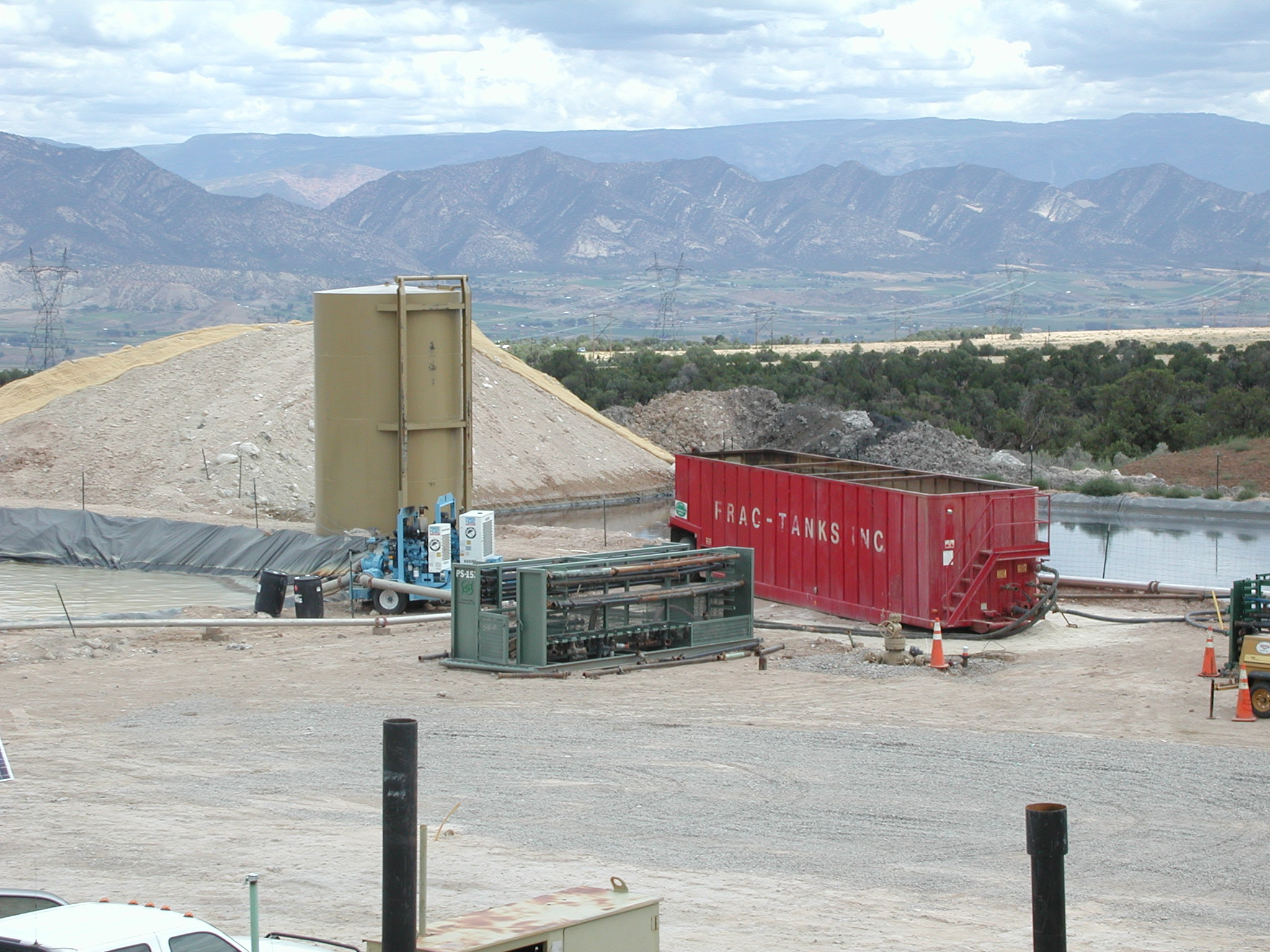 Hydraulic fracturing, or fracking, for natural gas has been blamed for making western Wyoming's air dirtier during winter than Los Angeles' air, according to this article in the Houston Chronicle. The claim was brought up during a public comment session on new rules for fracking held in Colorado by the Environmental Protection Agency.
Those new rules would reduce the air pollution from fracking by 25 percent and would boost oil and gas industry profits by capturing gas that could be sold instead of being lost to the atmosphere. Industry groups aren't sure about that and want more time to study the new rules. Colorado residents contend the industry has had enough time to clean up its act, and they want action before Colorado's mountains become socked in by haze, hurting tourism and jobs related to the outdoors.
Health issues were also cited at the hearing, with the American Lung Association urging the EPA to go further and limit methane emissions more directly. Others want the wholesale burn off of natural gas, also known as flaring, to be stopped, and still others want existing facilities to fall under the new rules as well.
Supporters of the oil and gas industry said more regulation will limit exploration, thereby reducing jobs and taxes. No new perspectives there.
Those new rules would reduce the air pollution from fracking by 25 percent and would boost oil and gas industry profits by capturing gas that could be sold instead of being lost to the atmosphere. Industry groups aren't sure about that and want more time to study the new rules. Colorado residents contend the industry has had enough time to clean up its act, and they want action before Colorado's mountains become socked in by haze, hurting tourism and jobs related to the outdoors.
Health issues were also cited at the hearing, with the American Lung Association urging the EPA to go further and limit methane emissions more directly. Others want the wholesale burn off of natural gas, also known as flaring, to be stopped, and still others want existing facilities to fall under the new rules as well.
Supporters of the oil and gas industry said more regulation will limit exploration, thereby reducing jobs and taxes. No new perspectives there.
Friday, December 23, 2011
Water Treatment Byproducts Taint Colorado Town's H2O
By: Duane Craig
 The process of making community water safe to drink sometimes carries its own risks. Residents in iconic Hotchkiss, Colorado, have found that out since being told not to drink their community's water for six months so they can avoid ingesting haloacetic acids, according to this report in the Houston Chronicle.
The Environmental Protection Agency notes that the regulated haloacetic acids include monochloroacetic acid, dichloroacetic acid, trichloroacetic acid, monobromoacetic acid, and dibromoacetic acid and that water systems have to limit those to 60 parts per billion on an annual average. Hotchkiss' average was 61 ppb. These acids form when disinfecting agents interact with organic substances in the water.
Fortunately, the townsfolk can still keep up their personal hygiene since these types of contaminants don't transfer through the skin readily, so bathing won't pose a risk. Their big brothers, trihalomethanes (THMs), haloketones (HKs) are a different story and transfer through skin more easily, according to this abstract from a research paper on the subject.
EPA warns Hotchkiss Residence not to drink the water
The Environmental Protection Agency notes that the regulated haloacetic acids include monochloroacetic acid, dichloroacetic acid, trichloroacetic acid, monobromoacetic acid, and dibromoacetic acid and that water systems have to limit those to 60 parts per billion on an annual average. Hotchkiss' average was 61 ppb. These acids form when disinfecting agents interact with organic substances in the water.
Fortunately, the townsfolk can still keep up their personal hygiene since these types of contaminants don't transfer through the skin readily, so bathing won't pose a risk. Their big brothers, trihalomethanes (THMs), haloketones (HKs) are a different story and transfer through skin more easily, according to this abstract from a research paper on the subject.
Tuesday, September 28, 2010
Boulder, CO, Xcel Testing Downtown Groundwater For Toxic Chemicals
September 27, 2010 - Two chemicals that can lead to major health problems have been detected in the groundwater near city-owned property in downtown Boulder, prompting a monthlong study on how widespread the problem is.
Officials say they don't think the benzene and naphthalene -- common industrial agents -- are threatening the city's drinking water, but they are investigating how and when the chemicals seeped into the groundwater at 1717 15th St.
They are looking into whether the site's history as a coal gasification plant in the early 1900s, or its more recent use as a dry cleaner business, are possible causes of the contamination. Most experts are already pointing to the old gas plant as the likely culprit, which could mean the chemicals have existed underground for decades.
Regardless of the source of the potentially dangerous compounds, Xcel Energy and the city of Boulder have agreed to share the cost of a $30,000 study into the surrounding groundwater as well as the costs of a possible cleanup effort.
While the city manager first publicly acknowledged the problem in a brief memo sent Friday to the City Council, Boulder spokesman Patrick von Keyserling said the city has known about the contamination since mid-2009.
More...
Officials say they don't think the benzene and naphthalene -- common industrial agents -- are threatening the city's drinking water, but they are investigating how and when the chemicals seeped into the groundwater at 1717 15th St.
They are looking into whether the site's history as a coal gasification plant in the early 1900s, or its more recent use as a dry cleaner business, are possible causes of the contamination. Most experts are already pointing to the old gas plant as the likely culprit, which could mean the chemicals have existed underground for decades.
Regardless of the source of the potentially dangerous compounds, Xcel Energy and the city of Boulder have agreed to share the cost of a $30,000 study into the surrounding groundwater as well as the costs of a possible cleanup effort.
While the city manager first publicly acknowledged the problem in a brief memo sent Friday to the City Council, Boulder spokesman Patrick von Keyserling said the city has known about the contamination since mid-2009.
More...
Monday, October 12, 2009
Fears of tainted water well up in western Colorado
October 11, 2009 - Denverpost.com - Ned Prather can't forget that awful drink of water.
Tests would show the water from a spring he has drank from for decades was heavily contaminated with a carcinogenic and nervous system-damaging chemical stew known as BTEX — benzene, toluene, ethylbenzine and xylene. BTEX and other volatile organic compounds come to the surface in the production water from oil and gas wells.
More . . .
Tests would show the water from a spring he has drank from for decades was heavily contaminated with a carcinogenic and nervous system-damaging chemical stew known as BTEX — benzene, toluene, ethylbenzine and xylene. BTEX and other volatile organic compounds come to the surface in the production water from oil and gas wells.
More . . .
Pollution an enduring legacy at old ICBM sites
October 10, 2009 - As U.S. Air Force officials marked the 50th anniversary of the deployment of nuclear missiles to sites in the rural United States this past week, residents in some of these communities are still grappling with another legacy — groundwater pollution from chemicals used to clean and maintain the weapons.
The U.S. Army Corps of Engineers is identifying and cleaning up dozens of former nuclear missile sites in nine states.
he ICBM sites include 14 in Kansas, 10 in Nebraska, seven in Wyoming, seven in Colorado and two in Oklahoma. California, New Mexico, New York and Texas have one contaminated ICBM site each.
TCE may have polluted many more missile sites than the corps is aware.
Wednesday, September 9, 2009
500 Homes And Stores To Be Built On Denver Landfill
September 8, 2009 - A former “Low-Level Radioactive Waste Disposal Site”– labeled as such in Air Force Installation Documents – will become home to International Risk Group’s (IRG) upcoming Lowry Vista housing and retail development.
IRG, a Littleton-based corporation with multiple subsidiaries, deals in the remediation and redevelopment of “brownfields,” an Environmental Protection Agency term for land “with the presence or potential presence of a hazardous substance, pollutant, or contaminant.”
“We’re pursuing a General Development Plan (GDP) on the site,” says Marcus Pachner of The Pachner Company, an IRG consultant. “We just re-submitted the second GDP about three months ago and in early October we’ll start the rezoning process. It’s full speed ahead now.”
More...
IRG, a Littleton-based corporation with multiple subsidiaries, deals in the remediation and redevelopment of “brownfields,” an Environmental Protection Agency term for land “with the presence or potential presence of a hazardous substance, pollutant, or contaminant.”
“We’re pursuing a General Development Plan (GDP) on the site,” says Marcus Pachner of The Pachner Company, an IRG consultant. “We just re-submitted the second GDP about three months ago and in early October we’ll start the rezoning process. It’s full speed ahead now.”
More...
Monday, July 27, 2009
Denver Superfund neighborhood pushing for more cleanup
July 13, 2009 - It's the last chapter in a long legal battle to clean up a polluted Denver neighborhood.
Residents in Globeville fought for years against a smelting plant they believed was making them sick.
Many here claimed that family members came down with diseases caused by the pollution.
More . . .
Residents in Globeville fought for years against a smelting plant they believed was making them sick.
Many here claimed that family members came down with diseases caused by the pollution.
More . . .
Tuesday, July 21, 2009
Colorado Superfund neighborhood gets cleaned up at long last
July 13, 2009 - Contractors have begun removing the last of polluted soil on 32 properties in Globeville, Colorado. Residents fought for years against the smelting plant that they believed was making them sick with releases of contaminants such as arsenic and lead.
More...
More...
Wednesday, April 22, 2009
Methane Found in Denver Well Water
April 22, 2009 - Jesse Ellsworth thought something was wrong with his water when it began to smell funny and popped out of his faucet in bursts. Then, in February, the Fort Lupton resident launched an experiment: He flipped on the kitchen tap and touched a cigarette lighter to the stream. As flint sparked steel, the water lit on fire like a torch.
Ellsworth is one of at least 29 residents in small farming communities northeast of Denver who have asked either the energy companies or the Colorado Oil and Gas Conservation Commission to test for natural gas in their water wells.
More...
Ellsworth is one of at least 29 residents in small farming communities northeast of Denver who have asked either the energy companies or the Colorado Oil and Gas Conservation Commission to test for natural gas in their water wells.
More...
Monday, March 30, 2009
Colorado residents are fearing gassed up well water
March 28, 2009 - The Colorado Oil and Gas Conservation Commission on Friday failed to calm angered residents who complained they were never informed that their well water might be tainted with natural gas.
Residents recently learned their neighbor, Fort Lupton resident Amee Ellsworth, could literally set her water on fire because her well is contaminated with natural gas.
More . . .
Residents recently learned their neighbor, Fort Lupton resident Amee Ellsworth, could literally set her water on fire because her well is contaminated with natural gas.
More . . .
Wednesday, March 25, 2009
Contaminated water from underground storage tank sickens Colorado town
March 24, 2009 - When we talk about underground storage tanks, we normally talk about how the contents of a leaking UST contaminate surrounding soil and groundwater. This week, however, the Denver Post reported a case of the opposite when soil contaminated with deadly bacteria permeated the walls of one town’s UST.
More . . .
More . . .
Tuesday, November 11, 2008
Toxic plume spurs study of public health in Colorado
October 18, 2008 - The federal government has begun a required but long-delayed comprehensive review of public health in Cañon City as newly found toxic pollution spreads from a shuttered uranium mill.
The U.S. Department of Health and Human Services' Agency for Toxic Substances and Disease Registry launched the review in response to new data and community concerns that pollution may contribute to unexplained ailments including cancer, miscarriages and neurological problems.
More . . .
The U.S. Department of Health and Human Services' Agency for Toxic Substances and Disease Registry launched the review in response to new data and community concerns that pollution may contribute to unexplained ailments including cancer, miscarriages and neurological problems.
More . . .
Sunday, March 2, 2008
Small Colorado community wages war against uranium mine
February 21, 2008 - Jean Hediger can stand at the edge of her organic wheat farm and look west to the Rockies, east toward this speck-in-the-road town and straight ahead into what she sees as her worst nightmare.
A Canadian company’s plans to establish a uranium mine just across the two-lane county road from Hediger’s farm has triggered a bitter tug-of-war with residents of this fast-growing region about 70 miles north of Denver who fear the risk of contaminated water and other health problems.
More . . .
A Canadian company’s plans to establish a uranium mine just across the two-lane county road from Hediger’s farm has triggered a bitter tug-of-war with residents of this fast-growing region about 70 miles north of Denver who fear the risk of contaminated water and other health problems.
More . . .
Tuesday, January 8, 2008
Energy drilling linked to well contamination in Colorado
January 2, 2008 - Sharon Britton says oil and gas companies contaminated her water and made her sick, forcing her to desert her home in rural Adams County.
Proving it, however, is another thing.
Her plight, as she tells it, dates to at least 2004, when water from her well showed a dark-grayish tint. Laundered clothes came out dingy.
More . . .Friday, December 28, 2007
Is contaminated water responsible for health problems in Adams County Colorado?
December 28, 2007 - Sharon Britton says oil and gas companies contaminated her water and made her sick, forcing her to desert her home in rural Adams County.
Her plight, as she tells it, dates to at least 2004, when water from her well showed a dark-grayish tint. Laundered clothes came out dingy.
A representative from United States Exploration Inc., which owned an oil and gas well on Britton's land at the time, came to visit. According to Britton, he said their water showed high iron levels. A water filter appeared to solve that problem
.
But early in 2006, Britton said she started having health problems, including a rash across her torso. She also had excessive thirst.
In October 2006, her husband, Jim, heard gurgling around their water well. Soon after, state regulators and Noble Energy - the new owner of the oil well - discovered that methane linked to its well was tainting the Britton's water supply.
More . . .
Her plight, as she tells it, dates to at least 2004, when water from her well showed a dark-grayish tint. Laundered clothes came out dingy.
A representative from United States Exploration Inc., which owned an oil and gas well on Britton's land at the time, came to visit. According to Britton, he said their water showed high iron levels. A water filter appeared to solve that problem
.
But early in 2006, Britton said she started having health problems, including a rash across her torso. She also had excessive thirst.
In October 2006, her husband, Jim, heard gurgling around their water well. Soon after, state regulators and Noble Energy - the new owner of the oil well - discovered that methane linked to its well was tainting the Britton's water supply.
More . . .
Monday, May 21, 2007
Methane contaminated ground in Colorado to be cleaned two years after home explodes
May 20, 2007 - DENVER - Cleanup efforts will begin next month on a methane-contaminated patch of ground near Bondad, where a home exploded two years ago.
An investigation blamed an old gas well known as the Bryce 1-X, which was drilled and abandoned before World War II. Methane had been leaking into the soil ever since, and in February 2005, it accumulated under the home of Charles Yoakum, causing an explosion that destroyed his house. Yoakum was injured but survived.
More . . .
An investigation blamed an old gas well known as the Bryce 1-X, which was drilled and abandoned before World War II. Methane had been leaking into the soil ever since, and in February 2005, it accumulated under the home of Charles Yoakum, causing an explosion that destroyed his house. Yoakum was injured but survived.
More . . .
Subscribe to:
Posts (Atom)