
Water Contamination, Land Pollution & Hazardous Waste Material are issues families all across America are afflicted with daily.
Showing posts with label uranium. Show all posts
Showing posts with label uranium. Show all posts
Monday, April 15, 2013
Contaminated Wells Could Spark New Rules
By: Nathan Lamb
Officials from Somers, Connecticut are considering mandatory testing for private wells, after recent samples discovered uranium and arsenic in local drinking water, according to this story from the Journal Inquirer.
The issue came to light when officials tested more than 50 local wells. Town sanitarian Steven Jacobs didn’t give a specific number, but said high levels of contaminants were found in a small percentage of samples.
Arsenic and uranium are thought to have leeched into the water from bedrock, resulting in isolated pockets of contamination.
According the EPA, high levels of uranium can lead to increased cancer risk and/or liver damage. Arsenic—a naturally occurring, odorless and tasteless semi-metal—is linked to increased risk for a variety of cancers.
Two-thirds of the roughly 10,000 residents in Somers are on private wells. Jacobs said the town doesn’t regulate those drinking supplies, but that could change. The town’s Water Pollution and Control Authority recently collaborated with state health and environmental officials to draft an ordinance that would require testing of private wells.
Jacobs said the ordinance is still under development. In the meantime he advised residents with private wells to voluntarily do the testing.
Somers is located roughly 20 miles northeast of Hartford.


Thursday, February 16, 2012
Survivors on a Radioactive Wasteland
By: Duane Craig
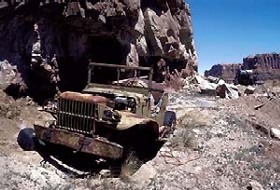
There is a long story of radioactive
contamination across New Mexico, especially in the northwestern portion of the
state, where recent estimates of cleaning up just one site will require the
removal of 1.4 million tons of soil, according to an article at E&E
Publishing, LLC.
Much of this story centers around the
U.S. Department of Energy and the United States’ race with the Soviet Union to
see who could create more nuclear weapons. The five-year cleanup plans in this
part of the country come and go like the winds, while more than 500 polluted
mine sites wait to be cleaned up. Meanwhile, the people live with contaminated
water and land, and there are even radioactive homes that were built with waste
from uranium mining.
The Environmental Protection Agency says
miners took about four million tons of uranium from Navajo lands between 1944
and 1986, and besides fueling the manufacture of nuclear bombs, it was also
pressed into service for nuclear power plants. Uranium mining activity left an
indelible mark on the land and even in the water. In a part of the country
where 30 percent of residents use untreated water, and water quality is often
unknown or too dangerous to drink, the long-term health implications become
even more staggering.
There is much more to the detailed story here.
Wednesday, January 18, 2012
Uranium and Radon Contamination Not Always Linked to Mining
By: Duane Craig
There doesn't have to be uranium mining nearby to cause contamination of water supplies because uranium occurs naturally in many parts of the country. Take Georgia for example.
In Macon, some homeowners were recently surprised to find uranium at 21 times the safe limit in their well water and radon in their indoor air. One woman claimed she was drinking nearly a gallon of the water every day, and others who had their hair tested for uranium found it contained high levels of the radioactive material, according to this report in Macon.com.
There is a layer of granite that runs through several southeastern states. Water that lies below that layer can be high in uranium, and radon is more prevalent above ground in those places also. This creates double jeopardy for those living above the granite. Radon inside buildings is thought to contribute to incidents of lung cancer as people bathe and wash clothes in water containing uranium. In other cases, the radon may seep into buildings through the foundations as it naturally rises through the soil. One in 15 radon air tests in Georgia will have unacceptable limits of the gas.
Twenty-two water tests in the Macon area had uranium present in excess of 30 parts per billion, the recognized safe limit, but a few tests had concentrations as high as 300 and 400 parts per billion. Water testing is on the increase in Macon.
 |
| Photo from: BEAU CABELL/THE TELEGRAPH |
In Macon, some homeowners were recently surprised to find uranium at 21 times the safe limit in their well water and radon in their indoor air. One woman claimed she was drinking nearly a gallon of the water every day, and others who had their hair tested for uranium found it contained high levels of the radioactive material, according to this report in Macon.com.
There is a layer of granite that runs through several southeastern states. Water that lies below that layer can be high in uranium, and radon is more prevalent above ground in those places also. This creates double jeopardy for those living above the granite. Radon inside buildings is thought to contribute to incidents of lung cancer as people bathe and wash clothes in water containing uranium. In other cases, the radon may seep into buildings through the foundations as it naturally rises through the soil. One in 15 radon air tests in Georgia will have unacceptable limits of the gas.
Twenty-two water tests in the Macon area had uranium present in excess of 30 parts per billion, the recognized safe limit, but a few tests had concentrations as high as 300 and 400 parts per billion. Water testing is on the increase in Macon.
Friday, December 2, 2011
Montana Basin Eyes Contamination Sources
By: Duane Craig
 The Flathead Basin in Montana is a complex and sensitive watershed that may be seeing threats from septic systems, pharmaceuticals, personal care products and volatile and semi-volatile organic compounds.
The wells the samples came from are relatively shallow and therefore are more prone to contamination from surface sources, noted the Flathead City-County Health Department and the Montana Department of Environmental Quality in reinforcing the idea that the county's water is safe for drinking.
There will be a Phase II study done to look at similar pollution characteristics with greater scrutiny. Lower levels of contaminants will be detectable because of the lab used for the specimen analysis. The underground water's connection to the river is particularly mysterious so the studies are expected to help reveal some of those nuances.
Phase 1 assessment shows water contamination
Seventeen wells in the Evergreen area tested positive for VOCs and also had traces of chloroform, arsenic and uranium, according to a report in Hungry Horse News.com. As Phase I of an assessment of threats to the basin from increased human populations, the initial study by the University of Montana's Flathead Biological Station also found acetaminophen, sunscreen, bug spray and caffeine in the tested wells.The wells the samples came from are relatively shallow and therefore are more prone to contamination from surface sources, noted the Flathead City-County Health Department and the Montana Department of Environmental Quality in reinforcing the idea that the county's water is safe for drinking.
There will be a Phase II study done to look at similar pollution characteristics with greater scrutiny. Lower levels of contaminants will be detectable because of the lab used for the specimen analysis. The underground water's connection to the river is particularly mysterious so the studies are expected to help reveal some of those nuances.
Tuesday, September 21, 2010
Clear AZ Water Could Still Be Contaminated
September 15, 2010 - Even if tap water is clear, there is a significant chance that it could harbor dangerous — sometimes even deadly — contaminants.
Members of the Gila Watershed Partnership learned about contaminated wells and their threats to the health of people who depend on them during a Sept. 8 meeting. Kristine Uhl-man, program coordinator of the University of Arizona’s Nonpoint Education for Municipal Officials, known as NEMO, talked about several contaminants and the importance of testing private wells yearly.
Uhlman said 10 percent to 42 percent of water taps are contaminated with viruses, and 95 percent of small groundwater wells violate one or more of the nation’s drinking water standards.
There are 7,014 drinking water wells in Arizona. These are at risk of contamination from nitrates, fluoride, uranium, arsenic and other substances.
Nitrates come from several sources, including fecal matter, fertilizer and natural occurrence in the soil. The chances for well contamination in Arizona are elevated because not enough rain falls to dilute and disperse the contaminants.
More...
Tuesday, April 20, 2010
Kentucky landowners settle lawsuit over contamination from uranium plant that cut land values
April 20, 2010- A group of landowners have settled in a long-running lawsuit for $1.75 million over allegations that water leaks from a western Kentucky uranium enrichment plant devalued property values.
Edmund Schmidt, a Nashville, Tenn., attorney representing the landowners living near the Paducah Gaseous Diffusion Plant, about 10 miles west of Paducah, confirmed the settlement on Tuesday. Schmidt said the funds are aimed at compensating between 70 and 80 homeowners for the devaluation of their property because of radiation contamination.
More...
Monday, November 23, 2009
EPA: Uranium from polluted mine in Nevada wells
November 21, 2009 - For almost a decade, people who make their homes in this rural community in the Mason Valley 65 miles southeast of Reno have blamed that enormous abandoned mine for the high levels of uranium in their water wells.
They say they have been met by a stone wall from state regulators, local politicians and the huge oil company that inherited the toxic site — British Petroleum. Those interests have insisted uranium naturally occurs in the region's soil and there's no way to prove that a half-century of processing metals at the former Anaconda pit mine is responsible for the contamination.
Monday, July 27, 2009
Uranium Contamination Haunts Navajo Country
NYT - July 26, 2009 - The legacy wrought from decades of uranium mining is long and painful here on the expansive reservation. Over the years, Navajo miners extracted some four million tons of uranium ore from the ground, much of it used by the United States government to make weapons.
More . . .
More . . .
Monday, June 29, 2009
EPA to rebuild uranium- contaminated Navajo homes in Arizona
June 24, 2009 - The federal government plans to spend up to $3 million a year to demolish and rebuild uranium-contaminated structures across the Navaho Nation, where Cold War-era mining of the radioactive substance left a legacy of disease and death.
More . . .
More . . .
Tuesday, March 3, 2009
Uranium found in Guilford, Connecticut home’s well
January 17, 2009 - A homeowner on White Birch Drive found slightly elevated levels of uranium in his well water in the past month, prompting town officials to encourage nearby residents to test their wells.
The initial test showed a uranium level of 42 micrograms per liter, 12 parts per billion higher than the federal Environmental Protection Agency’s maximum level of 30 micrograms per liter, Guilford Health Director Dennis Johnson said.
More . . .
The initial test showed a uranium level of 42 micrograms per liter, 12 parts per billion higher than the federal Environmental Protection Agency’s maximum level of 30 micrograms per liter, Guilford Health Director Dennis Johnson said.
More . . .
Tuesday, February 24, 2009
Uranium found in 16 public wells in Connecticut
December 15, 2008 - Tests on 16 well systems in Connecticut in the past year have shown uranium contamination in the water, according to state Department of Public Health records.
All residential public water systems serving 25 or more people must be tested quarterly for uranium. At the end of the third quarter in September, nine systems in four towns were out of compliance, according to the records, which were reviewed by The Hartford Courant. Seven other systems that had violated the uranium standard earlier in the year were in compliance after the latest round of tests, the newspaper reported yesterday.
More . . .
Tuesday, November 11, 2008
Toxic plume spurs study of public health in Colorado
October 18, 2008 - The federal government has begun a required but long-delayed comprehensive review of public health in Cañon City as newly found toxic pollution spreads from a shuttered uranium mill.
The U.S. Department of Health and Human Services' Agency for Toxic Substances and Disease Registry launched the review in response to new data and community concerns that pollution may contribute to unexplained ailments including cancer, miscarriages and neurological problems.
More . . .
The U.S. Department of Health and Human Services' Agency for Toxic Substances and Disease Registry launched the review in response to new data and community concerns that pollution may contribute to unexplained ailments including cancer, miscarriages and neurological problems.
More . . .
Tuesday, October 14, 2008
Uranium contamination found in Idaho drinking wells
September 16, 2008 - MERIDIAN, ID — Uranium has been found in the wells that provide drinking water for a 285-home subdivision near here, and the Idaho Department of Environmental Quality (DEQ) has suggested the city provide a solution.
More . . .
More . . .
Friday, June 27, 2008
Idaho neighborhood has radioactive material in water
June 26, 2008 - In one local neighborhood, many residents are relying on bottled water to drink and showering with water run through a filter, because a chemical in their tap water could increase the risk of getting cancer.
It's a very real threat, and part of a problem that has been going on for years.
The people who live in the Floating Feather Mobile Home Park in Eagle have received notices for several months that their drinking water has an excess of uranium.
Sunday, April 20, 2008
"Fly ash" may be contaminating residents' water in Chesapeake Virginia
April 7, 2008 - There are major environmental health concerns in Chesapeake. Residents' fears stem from the new Battlefield Golf Course.
The 217-acre course is made with more than 1.5-million tons of "fly ash" which is the by-product left behind when coal is burned to make electricity. It contains heavy metals like arsenic, lead and uranium.
More . . .
The 217-acre course is made with more than 1.5-million tons of "fly ash" which is the by-product left behind when coal is burned to make electricity. It contains heavy metals like arsenic, lead and uranium.
More . . .
Sunday, March 2, 2008
Small Colorado community wages war against uranium mine
February 21, 2008 - Jean Hediger can stand at the edge of her organic wheat farm and look west to the Rockies, east toward this speck-in-the-road town and straight ahead into what she sees as her worst nightmare.
A Canadian company’s plans to establish a uranium mine just across the two-lane county road from Hediger’s farm has triggered a bitter tug-of-war with residents of this fast-growing region about 70 miles north of Denver who fear the risk of contaminated water and other health problems.
More . . .
A Canadian company’s plans to establish a uranium mine just across the two-lane county road from Hediger’s farm has triggered a bitter tug-of-war with residents of this fast-growing region about 70 miles north of Denver who fear the risk of contaminated water and other health problems.
More . . .
Friday, January 4, 2008
Health and Environmental Impacts of Uranium Contamination in the Navajo Nation
December 29, 2007 - Late this year, spurred to action by a series of articles in The Los Angeles Times in 2006, Representative Henry Waxman (D-Calif.) held a hearing on “The Health and Environmental Impacts of Uranium Contamination in the Navajo Nation” in the House Oversight Committee.
The Waxman hearings led to a charge to federal and Navajo Nation agencies to determine a course of action for dealing with the aftermath of uranium mining: Identify a plan for the studies, tasks and long-term actions needed to get a handle on and deal with the contamination issues left behind, as well as a budget. Some close to the situation anticipated a multi-year plan and budget.
The agencies, however, returned with a one-year plan.
More . . .
Monday, August 27, 2007
Neighbors of former uranium processing plant in Ohio can Sue - Health threats linked to toxins
August 27, 2007 - A federal judge has ruled that neighbors of a former uranium-processing plant suing because of health problems can proceed with their case, a lawyer for the plaintiffs said Saturday.
The suit was first filed against Divested Atomic Corporation in 1990 by residents who lived near the Portsmouth Gaseous Diffusion Plant, which once enriched uranium for weapons and nuclear fuel, but closed in 2001.
Plaintiffs can go forward on their claim that the plant contaminated their neighborhood with hazardous products, including carcinogenic materials, from its site, said attorney Stanley Chesley, of Cincinnati, who represents plaintiffs in the case.
Monday, August 6, 2007
Arizona residents fear uranium contamination from past industry
August 2, 2007 - Five weeks ago, the company that used to own the uranium mill on the other side of the nearest paved road, U.S. Highway 160, reached an agreement with the Navajo Nation to test nearby wells it may have contaminated. El Paso Natural Gas hasn’t named the wells it will test yet, so Charley can only wonder if it will include the well her family has been using all these years.
The area’s troubles began when the Rare Metals Corporation started processing uranium at the mill in 1956. Off and on for the next 10 years, it processed some 800,000 tons of ore, all of it for the federal government’s nuclear weapons program. Following the federal regulations of the time, Rare Metals dumped the damp tailings, the waste product of milling, into unlined evaporation ponds on site. Unfortunately, not all the water evaporated. Much of the water seeped into the ground, taking uranium and other contaminants in the tailings with it.
More . . .
Subscribe to:
Posts (Atom)