Showing posts with label vermont. Show all posts

Tuesday, December 13, 2011

Passing the Roadway Salt

By: Duane Craig

What happens to all the salt that's spread on roadways in northern climes to melt ice? Well, one place it appears to be ending up is in drinking water wells. Not only that, but the places where the salt is stored are also on the radar as potential groundwater contaminators, according to a report in the Watertown Daily Times.com.

Road salt contaminating groundwater

In Orleans, New York, residents and property owners are still waiting for the town's department of public works to coordinate water well testing with the state's department of transportation and it looks like the process of identifying the contaminated wells will be delayed another month. But, time probably won't make much difference at this point. According to one observer, contamination from the salt storage barn along I-81 first came to light in 2002 but salt has been used on roads for more than 60 years.

In this case wells within a one mile radius of the salt barn will be tested. From Collins Landing to Seaway Avenue and beyond even perhaps to Grass Point State Park and Fishers Landing, the legacy of road maintenance extends well beyond the roads.

It was New York's neighbor to the east, New Hampshire, that first adopted a "general policy" of using salt on roadways. That year, the winter of 1941-42, about 5,000 tons of salt were used across the United States on wintry roads. However, as the highway system expanded, so did salt use until in 1970, 10 million tons were being used each winter, according to this paper.

Monday, December 12, 2011

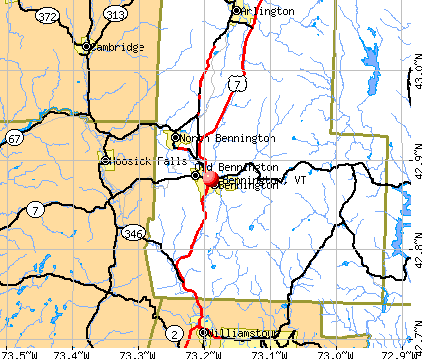
Whoops, TCE and PCE on the Move Again at Bennington Superfund Site

By: Duane Craig

A very deep trench is proposed to subvert the movement of contamination from a former landfill in Bennington, Vermont, according to this article in the VTDigger.org. The landfill is also a formerly active Superfund site with remediation completed in 1999, according to the Environmental Protection Agency.

Groundwater contamination found in Barney Brook

Trichloroethylene, or TCE, and tetrachloroethylene, or PCE, have escaped from the landfill which was previously capped and adorned with a soil vapor extraction system. Apparently the groundwater flow changed and some contamination has been found in a tributary to Barney Brook. For six years in the late 1960s and early 1970s, the landfill was a dumping place for industrial wastes from local companies. Those wastes included polychlorinated biphenyls, or PCBs, organic solvents and lead. These wastes were dumped into a lagoon that was not lined to prevent absorption into the soil.

In 1976, a system was installed to lower the groundwater beneath the landfill by carrying it away to an unlined, pond area. Ten years later PCBs, lead, arsenic, benzene and ethylbenzene were flowing into the pond, according to this EPA report.

The new trench will be 25 feet deep and 200 feet long. Because it goes down to impervious soil it is expected to catch the contaminants. The bottom of the trench will be filled with sand and iron shavings to break down the contaminants and stop their movement.

Friday, November 18, 2011

Problems Arise With Southern Cap On Burlington's Pine Street Canal

By: Duane Craig
Barges in the Pine Street Superfund Site.

Pine Street Canal Superfund site still active.

Old, cleaned up or contained contamination sometimes resurfaces to create new problems. The Pine Street Canal in Burlington, Vermont, was once home to a coal gassification plant. For almost 60 years "plant wastewaters and residual oil and wood chips saturated with organic compounds were directly discharged or disposed of in the Pine Street Canal wetland.
During the 1960s and 1970s oily material seeping to the surface alerted authorities and tests showed high levels of polyaromatic hydrocarbons, benzene, tuolene, xylenes and other volatile organic compounds related to coal tar. At that time the concern was these contaminants would make their way into Lake Champlain, the community's source of drinking water, according o the EPA's background on the site.
Site wide cleanup activities followed emergency cleanup efforts and the record of decision listed capping and sealing contaminated sediment in the canal, the turning basin and adjacent wetlands. Administrative controls rounded out the plan. By 2009 though, the original cap was not holding back seepage of the contaminants at the canal's south end so a second cap was proposed. That cap will also fill up, so at the same time passive recovery wells need to be drilled to catch contaminates that can be pumped and treated.
According to a report in Bloomberg Bussinessweek, the EPA is amending its plan to cap the southern end of the canal by also adding an underground vertical barrier and it is looking for public comments on that new plan. This cleanup started in 1985, nearly 20 years after the contamination was discovered.

Friday, March 19, 2010

Contaminated Groundwater Making Its Way Into The Connecticut River

March 18, 2010 - Contaminated groundwater at Vermont Yankee nuclear power plant in Vernon is making its way into the Connecticut River, stated the Vermont Department of Health in its daily update posted on its Web site on Wednesday. However, stated the DOH, the tritium in the contaminated groundwater is being diluted by the water in the river "below the lower level of detection."

"The major source of tritium contamination of groundwater -- if not the only source -- was identified at the advanced off gas pipe tunnel, and the leak stopped on the weekend of Feb. 14," stated the DOH's daily update. Since that time, water samples taken from the groundwater monitoring well nearest to the off gas tunnel have shown decreasing tritium concentrations and water samples taken from wells further east have shown increasing tritium concentrations, it stated.

More...

Friday, February 5, 2010

Radioactive Tritium Found in Groundwater Near Vermont Nuclear Plant

February 5, 2010 - In a community where the elementary school principal's office has a radiation gauge, safety is never far from people's minds. The discovery of radioactive tritium in a groundwater monitoring well at Vermont Yankee nuclear plant has some thinking about it even more now.

"I want it shut down," said Edward Riordan, 42, of Vernon, smoking a cigarette outside Nesbitt's Portside Tavern after lunch Tuesday. "There's radioactivity leaking all over the place."
Riordan, whose late father worked at the plant, said the tritium leak has caused him to rethink his recreational use of the Connecticut River. "I used to swim and fish in it, but I'm not going to now. Now, we're not going to bother."

Tritium, a radioactive isotope of hydrogen, can cause cancer if ingested, inhaled or absorbed through skin in large amounts.

More...

Monday, June 8, 2009

PCE leaves a toxic legacy in Burlington, VT

June 7, 2009 - Few Burlingtonians may remember Park Cleaners, a dry-cleaning business run out of the old Blinn House on 151 South Champlain St. in 1958.

The business lasted only one year at the site, but its brief time there was long enough to create a troublesome underground chemical contamination plume that today stretches from the aging, paint-chipped building almost to the shores of Lake Champlain.

The culprit: tetrachloroethylene, or PCE for short, a chemical widely used by dry cleaners and apparently discharged into the soil by Park Cleaners’ employees. The chemical can cause headaches and dizziness in the short term and, potentially, cancer later on.

More . . .

Monday, March 30, 2009

Toxic contamination haunts Vermont neighborhood

March 29, 2009 - Years ago, it turns out, chemicals including PCE were allegedly dumped on the ground outside of Parkway Cleaners, a dry-cleaning business that once operated directly across the street from LaBelle’s home.

The latest results from test wells on the former dry cleaner site show that the PCE in the groundwater below is at 14,000 parts per billion, 2,800 percent above the state’s accepted level of 5 parts per billion.

More . . .

Friday, November 2, 2007

No tax break for Vermont residents who own property contaminated by nearby Energize plant

November 2, 2007 - BENNINGTON — What happens to the property values of homes affected by the leaking of carcinogens at the Energizer plant will be dictated by the market, according to a town official.

"That's going to be a question that ultimately the listers will have to answer and the market will dictate," said Bennington Town Manager Stuart Hurd.

The town has no intention of offering breaks on appraisals, Hurd said. The area around the Energizer plant was reappraised earlier this year as part of the rolling reappraisal system used by the town.

"It will be taken as a case by case basis," Hurd said. "As far as the listers going out and saying, 'OK, you're all going to be getting a reduction,' that is not going to happen."
State officials presented a plan to about a dozen neighbors Tuesday designed to remediate tetrachloroethene, or PCE, and trichloroethene, or TCE, contamination at the Energizer plant.

More . . .

Thursday, November 1, 2007

Vermont homeowners concerned about factory contamination and impact on property values

October 31, 2007 - State officials presented a plan to remediate chemical contamination at the Energizer plant Tuesday night, saying the aggressive method chosen should capture enough of the contamination to meet state standards.

About a dozen residents who live near the plant were on hand to hear from Michael B. Smith, a geologist with the state Agency of Natural Resources waste management division, present the two-step plan.

Homeowners did not question the plan but we're concerned about what the contamination would do to the value of their property. Furthermore, several expressed concern that no one representing the town of Bennington was present to answer questions.

More . . .

Saturday, May 19, 2007

Vermont Supreme Court: Homebuyers Who Weren't Told About Contamination Were Defrauded

May 19, 2007 - The Vermont Supreme Court has ruled that the owners of a Killington home were consumer fraud victims in 2000 when a real estate company failed to inform them that the property they were buying had a water supply tainted by a gasoline spill.

The home was one of 36 in the area with water supplies contaminated by MTBE or other contaminants. MTBE is a chemical compound once widely used as a fuel additive, according to an environmental report supplied by the state.

The compound reached the supplies following a 1993 gasoline leak from a 275-gallon underground storage tank at the Summit Lodge on Killington Road, according to Bob Haslam, a senior envirionmental analyst in the firm's Hazardous Waste Division.

More . . .