By: Nathan Lamb
A plan to corral contaminants at an old wood treatment plant has been approved by federal regulators, but the solution is unpopular with neighbors, according to this story from the Gainesville Sun.
The Koppers wood treatment plant operated from 1919 to 2009, but soil and groundwater contamination at the 90-acre site landed the Gainesville business on the federal Superfund cleanup list in 1984. The contaminants include the carcinogen dioxin, which has been found in soil at the site and neighboring properties.
According to the EPA, the contamination stemmed from waste handling practices at the wood plant.
Recently approved by a federal judge, the cleanup plan calls for excavating the contaminated soil from at least 66 neighboring properties and putting it into a sealed underground containment area at the old wood plant at the 200 block of Northwest 23rd Avenue.
Unhappy about the plan to consolidate the contaminants at the old wood plant, the community submitted roughly 80 pages of comments on the issue, suggesting everything from relocation of the neighbors to concerns the disposal site could eventually leak into a nearby aquifer.
Officials charged with reviewing the plan say there's "little risk" to the aquifer from the sealed disposal site, adding the containment measures will be sufficient to protect public health.
Gainesville is approximately 110 miles northwest of Orlando and has a population of roughly 125,000 people.

Water Contamination, Land Pollution & Hazardous Waste Material are issues families all across America are afflicted with daily.
Showing posts with label groundwater contamination. Show all posts
Showing posts with label groundwater contamination. Show all posts
Thursday, August 1, 2013


Monday, July 29, 2013
City Pushing for Quicker Oil Cleanup
By: Nathan Lamb
Leaks from an old oil field are causing health concerns in California, and officials are hoping to spur quicker cleanup, according to this story from the Los Angeles Times.
The contamination—which includes the carcinogen benzene—was discovered in 2008 beneath Carson city's Carousel tract, which is now a residential area with 285 homes.
Cleanup is being handled jointly by state officials and the Shell Oil Company, and is not expected to get underway until next year.
The declaration of emergency was recently suggested by Carson's mayor, in an effort to spur more immediate action.
Shell has stated there is no immediate threat to public health. The company is currently doing vapor testing at area homes and is putting together a comprehensive cleanup plan.
Residents of the Carousel tract have been told to avoid exposed yard soils and to not eat home-grown fruits or vegetables.
According to a recent report from the Los Angeles Regional Water Quality Control Board, the Carousel tract was a tank park used to store crude oil from 1920-1965. The study suggested that cracks and leaks in the concrete basins that contained the oil led to the contamination before the area was redeveloped in the late '60s.
The water control board study also found groundwater pollution in the area and crude oil in one local well, but no evidence of harmful vapors intruding into homes.
Carson is approximately 20 miles north of Los Angeles and has a population of roughly 91,000.
Leaks from an old oil field are causing health concerns in California, and officials are hoping to spur quicker cleanup, according to this story from the Los Angeles Times.
The contamination—which includes the carcinogen benzene—was discovered in 2008 beneath Carson city's Carousel tract, which is now a residential area with 285 homes.
Cleanup is being handled jointly by state officials and the Shell Oil Company, and is not expected to get underway until next year.
The declaration of emergency was recently suggested by Carson's mayor, in an effort to spur more immediate action.
Shell has stated there is no immediate threat to public health. The company is currently doing vapor testing at area homes and is putting together a comprehensive cleanup plan.
Residents of the Carousel tract have been told to avoid exposed yard soils and to not eat home-grown fruits or vegetables.
According to a recent report from the Los Angeles Regional Water Quality Control Board, the Carousel tract was a tank park used to store crude oil from 1920-1965. The study suggested that cracks and leaks in the concrete basins that contained the oil led to the contamination before the area was redeveloped in the late '60s.
The water control board study also found groundwater pollution in the area and crude oil in one local well, but no evidence of harmful vapors intruding into homes.
Carson is approximately 20 miles north of Los Angeles and has a population of roughly 91,000.
Wednesday, April 3, 2013
Power Plant Facing Legal Action for Contamination
By: Nathan Lamb
A North Carolina power plant accused of leaking waterborne pollutants is facing legal action from environmental officials, according to this story from the Citizens-Times newspaper.
A recently filed lawsuit from the N.C. Division of Water Quality alleges that the Progress Energy plant in Asheville is leaking toxic chemicals into groundwater and the nearby French Broad River.
Officials termed the contamination a threat to public health and water resources, and asked the courts to require the company to assess the cause and extent of the problem within 120 days. The suit also requests additional testing for groundwater and private wells nearby.
The state compelled the utility to install monitoring wells at the site in 2009, and the complaint cites test results from monitoring wells, along with two incidents where inspectors discovered contaminants migrating from coal ash ponds to the nearby river.
Specific contaminants included thallium, a toxic metal often associated with coal burning operations. According to the EPA, effects can include nerve damage, gastrointestinal irrational, damage to the kidney, liver, testicular tissue and hair loss.
Duke Energy, which owns the plant, issued a statement saying it has complied with its environmental permits.
Located roughly 120 miles west and north of Charlotte, Asheville is a city of roughly 83,000.
Thursday, November 29, 2012
Gas Station Contamination Leads to Demolition
By: Duane Craig
More than a dozen homes near Loch Raven Village, Md., are slated for demolition in the wake of petroleum contamination that first came to light back in 1987, according to the Essex-Middle River Patch. Apparently, a Hess gas station leaked gasoline that drained downhill, collected in the ground water and beneath homes where it caused vapor intrusion problems. The company settled with 17 of the property owners, however the details of the settlement weren’t released to the public.
One resident, however, who did not receive a buyout settlement, claims he still deals with an oil-covered sump pump in his basement and fumes down there that make it impossible to use the space for washing clothes. He said his property was excluded from the settlement because it was five feet outside the borders of the settlement area.
Previously, Hess had installed a system that removed the gasoline, and that treated the ground water beneath the homes. A separate system was also put into operation to deal with the soil vapors. Apparently though, those systems were either ineffective or more costly when compared with simply buying out the owners and demolishing the buildings. The system removing the gasoline and treating the ground water had been shut down in 2010.
More than a dozen homes near Loch Raven Village, Md., are slated for demolition in the wake of petroleum contamination that first came to light back in 1987, according to the Essex-Middle River Patch. Apparently, a Hess gas station leaked gasoline that drained downhill, collected in the ground water and beneath homes where it caused vapor intrusion problems. The company settled with 17 of the property owners, however the details of the settlement weren’t released to the public.
One resident, however, who did not receive a buyout settlement, claims he still deals with an oil-covered sump pump in his basement and fumes down there that make it impossible to use the space for washing clothes. He said his property was excluded from the settlement because it was five feet outside the borders of the settlement area.
Previously, Hess had installed a system that removed the gasoline, and that treated the ground water beneath the homes. A separate system was also put into operation to deal with the soil vapors. Apparently though, those systems were either ineffective or more costly when compared with simply buying out the owners and demolishing the buildings. The system removing the gasoline and treating the ground water had been shut down in 2010.
Tuesday, November 13, 2012
Nebraska Takes on Nitrate Challenges
By: Duane Craig
Farmers and residents in the area of York, Nebraska met recently to discuss the elevating levels of nitrates being found in groundwater, according to this report. To date, 17 communities have had one or more administrative orders on their municipal water supplies for elevated nitrate levels. Nitrate levels in large areas of Nebraska exceed the 10 ppm threshold. Not only that, levels are continuing to escalate.
Elevating levels of nitrates have been expected for at least a decade, even with drastic reductions in the amount of nitrogen that farmers are using to grow crops. That’s because decades of extremely heavy fertilizer applications have loaded the soils with nitrates that continue to work their way into water supplies. Besides being more specific in the timing of nitrogen applications, changes to existing rules would trigger new management levels at increasingly lower nitrate levels. Some of the public water supplies being affected include those of York, Seward, Utica, Polk, Osceola, Gresham, Henderson, Exeter and nine others.
Farmers and residents in the area of York, Nebraska met recently to discuss the elevating levels of nitrates being found in groundwater, according to this report. To date, 17 communities have had one or more administrative orders on their municipal water supplies for elevated nitrate levels. Nitrate levels in large areas of Nebraska exceed the 10 ppm threshold. Not only that, levels are continuing to escalate.
Elevating levels of nitrates have been expected for at least a decade, even with drastic reductions in the amount of nitrogen that farmers are using to grow crops. That’s because decades of extremely heavy fertilizer applications have loaded the soils with nitrates that continue to work their way into water supplies. Besides being more specific in the timing of nitrogen applications, changes to existing rules would trigger new management levels at increasingly lower nitrate levels. Some of the public water supplies being affected include those of York, Seward, Utica, Polk, Osceola, Gresham, Henderson, Exeter and nine others.
Monday, August 27, 2012
Pesticide Becomes Florida Community's Pest
By: Duane Craig
As DeLand, Fla. recently learned, there
is no escaping the consequences of trying to control the environment, and the
living things within it. Comfortable residents, some with golf course views and
many with country club memberships in the Country Club Estates community now
know one of the true costs of striving for a bug-free environment.
The pesticide, dieldrin, has been found in nearly 50 percent
of the wells tested, driving 118 homeowners to ask to be connected to city
water. Meanwhile, 80 homes are in the process of being connected, and the
property values in the community have dropped 50 percent, according to this report.
The pesticide is widely used to control termites and other
pests at the residences, is used at the nearby golf course and was stored and
mixed at a pest control business at U.S. 17-92 and Orange Camp Road. To be on
the safe side, residents have been encouraged to have wells tested regularly,
garden in above-ground containers, use masks for mowing lawns that have sandy
spots, and limit children playing in the yards.
Monday, April 23, 2012
Jet Fuel and Perchlorate Spoil Groundwater in Two Western Localities
By: Duane Craig
More news about the contamination being left behind by the country’s military-industrial complex comes from two locations: Albuquerque, N.M., and Barstow, Calif., according to reports here and here.
New Mexico’s environmental officials characterized Kirtland AFB’s efforts at determining the extent of groundwater contamination below Albuquerque’s southeast quadrant as inadequate, and the state’s environment department is calling for more monitoring wells to see just how much risk is posed to the city’s drinking water. Underground aircraft fuel lines had leaked for decades when the leaks were discovered in 1999, and an estimated 8 million gallons contributed to a plume of contamination that may now threaten city wells. The Air Force didn’t mention the problem until 2007, according to the report cited above in the Air Force Times.
A former pyrotechnic company in Barstow illegally dumped perchlorate that contributed to a 1.25-mile plume of contamination in the area’s groundwater, forcing the closure of one of the local water supplier’s wells. Recent drilling and testing shows perchlorate in concentrations up to 13,000 parts per billion. California says that 6 parts per billion is the maximum amount of the chemical allowed in drinking water. Cleanup activities are expected to begin soon.
More news about the contamination being left behind by the country’s military-industrial complex comes from two locations: Albuquerque, N.M., and Barstow, Calif., according to reports here and here.
New Mexico’s environmental officials characterized Kirtland AFB’s efforts at determining the extent of groundwater contamination below Albuquerque’s southeast quadrant as inadequate, and the state’s environment department is calling for more monitoring wells to see just how much risk is posed to the city’s drinking water. Underground aircraft fuel lines had leaked for decades when the leaks were discovered in 1999, and an estimated 8 million gallons contributed to a plume of contamination that may now threaten city wells. The Air Force didn’t mention the problem until 2007, according to the report cited above in the Air Force Times.
A former pyrotechnic company in Barstow illegally dumped perchlorate that contributed to a 1.25-mile plume of contamination in the area’s groundwater, forcing the closure of one of the local water supplier’s wells. Recent drilling and testing shows perchlorate in concentrations up to 13,000 parts per billion. California says that 6 parts per billion is the maximum amount of the chemical allowed in drinking water. Cleanup activities are expected to begin soon.
Tuesday, January 31, 2012
Asheville's Superfund Site Seeks Millions From PRPs
By: Duane Craig
 The Environmental Protection Agency has billed two potentially responsible parties $6.5 million to cover the agency's costs to date in remediating the CTS of Asheville National Priorities Superfund site at 235 Mills Gap Road in Asheville N.C., according to an article in the Citizen-Times.
The site is widely contaminated with solvents such as trichloroethylene, or TCE, and residents have linked the contamination to cases of cancer in children. The EPA is currently monitoring 105 private water wells in the area, and in the past the agency paid to connect residents to municipal water when a spring and five private water wells turned out to be contaminated with not only TCE but also petroleum compounds, according to the EPA's report on the site.

The site is widely contaminated with solvents such as trichloroethylene, or TCE, and residents have linked the contamination to cases of cancer in children. The EPA is currently monitoring 105 private water wells in the area, and in the past the agency paid to connect residents to municipal water when a spring and five private water wells turned out to be contaminated with not only TCE but also petroleum compounds, according to the EPA's report on the site.
Ashville Superfund site still contaminated with trichloroethylene
Residents are tired of the time it has taken to get cleanup actions started, and they welcomed the news of the EPA's latest efforts to get the two companies involved to pay up. Contamination is expected to lie below a 79,000-square-foot deteriorating building that is used by gangs, drug dealers and their users. The EPA has also been conducting vapor intrusion assessments and has been pressuring the responsible parties to plan and implement remediation tactics. A soil vapor extraction operation has so far removed 6,000 pounds of solvents from soils just above the water table.Thursday, January 19, 2012
Responsible Parties in Omega Superfund Site May Be on the Hook for $70 million
By: Duane Craig
 The Omega Chemical Corporation Superfund site in Whittier, California, needs $70 million to cleanup the volatile organic compounds in the ground water, according to a recent report at 89.3 KPCC, Southern California Public Radio. The plume of contamination extends 4.5 miles in a southwesterly direction, at least to Los Nietos Road.
Cleanup of the soil and above-ground area began in 1995. More than 100 potentially responsible parties banded together to "remove and treat 3,000 drums of hazardous waste, 60 cubic yards of hardened resin material, hundreds of empty contaminated drums, numerous cylinders and various other smaller containers." The group also emptied two rainwater sumps and four evaporators. It cleaned two cooling towers, removed 67 refrigerant gas cylinders and disposed of 40,000 gallons of contaminated liquids, according to the history of the site kept by the Environmental Protection Agency.

Cleanup of the soil and above-ground area began in 1995. More than 100 potentially responsible parties banded together to "remove and treat 3,000 drums of hazardous waste, 60 cubic yards of hardened resin material, hundreds of empty contaminated drums, numerous cylinders and various other smaller containers." The group also emptied two rainwater sumps and four evaporators. It cleaned two cooling towers, removed 67 refrigerant gas cylinders and disposed of 40,000 gallons of contaminated liquids, according to the history of the site kept by the Environmental Protection Agency.
Whittier, Ca needs $70 million to cleanup superfund site
The California Department of Toxic Substances Control had been alerted to problems at the business in the 1980s, and during the 1990s, the department had tried unsuccessfully to get the operators of the facility to remove wastes and clean up the site. The business recycled refrigerants and solvents from 1976 to 1991. Spills and leaks led to soil contamination with tetrachloroethylene, or PCE, trichloroethylene, or TCE, Freons 11 and 113 and other contaminants. One of the operable units managed by the EPA is addressing vapor intrusion in several buildings along the perimeter of the Omega property, while the other two operable units focus on the ground water contamination.Wednesday, January 18, 2012
Uranium and Radon Contamination Not Always Linked to Mining
By: Duane Craig
There doesn't have to be uranium mining nearby to cause contamination of water supplies because uranium occurs naturally in many parts of the country. Take Georgia for example.
In Macon, some homeowners were recently surprised to find uranium at 21 times the safe limit in their well water and radon in their indoor air. One woman claimed she was drinking nearly a gallon of the water every day, and others who had their hair tested for uranium found it contained high levels of the radioactive material, according to this report in Macon.com.
There is a layer of granite that runs through several southeastern states. Water that lies below that layer can be high in uranium, and radon is more prevalent above ground in those places also. This creates double jeopardy for those living above the granite. Radon inside buildings is thought to contribute to incidents of lung cancer as people bathe and wash clothes in water containing uranium. In other cases, the radon may seep into buildings through the foundations as it naturally rises through the soil. One in 15 radon air tests in Georgia will have unacceptable limits of the gas.
Twenty-two water tests in the Macon area had uranium present in excess of 30 parts per billion, the recognized safe limit, but a few tests had concentrations as high as 300 and 400 parts per billion. Water testing is on the increase in Macon.
 |
| Photo from: BEAU CABELL/THE TELEGRAPH |
In Macon, some homeowners were recently surprised to find uranium at 21 times the safe limit in their well water and radon in their indoor air. One woman claimed she was drinking nearly a gallon of the water every day, and others who had their hair tested for uranium found it contained high levels of the radioactive material, according to this report in Macon.com.
There is a layer of granite that runs through several southeastern states. Water that lies below that layer can be high in uranium, and radon is more prevalent above ground in those places also. This creates double jeopardy for those living above the granite. Radon inside buildings is thought to contribute to incidents of lung cancer as people bathe and wash clothes in water containing uranium. In other cases, the radon may seep into buildings through the foundations as it naturally rises through the soil. One in 15 radon air tests in Georgia will have unacceptable limits of the gas.
Twenty-two water tests in the Macon area had uranium present in excess of 30 parts per billion, the recognized safe limit, but a few tests had concentrations as high as 300 and 400 parts per billion. Water testing is on the increase in Macon.
Wednesday, January 4, 2012
Tales of Irene and Fuel Contamination
By: Duane Craig
Residents in the lower Hudson River area of New York discovered fuel-laden water in their basements after the heavy rains from tropical storm Irene. The fuel is thought to have originated at a nearby heating, ventilation and air conditioner contractor that also has fuel delivery operations, according to this report in lohud.com.
The smelly water was being pumped out of basements in Sloatsburg, New York by the local fire department while the state Department of Environmental Conservation investigated the cause of the spill. Immediately after the incident it was being assumed that storm water rose above the containment wall around the fuel facility and when combined with high winds jostled some tankers causing them to leak.
But, according to a report in NorthJersey.com the Ramapo River in New Jersey was also affected as an estimated 10,000 gallons of diesel and home heating oil leaked into that waterway from the same fuel storage and delivery facility. The facility stores up to 30,000 gallons of various fuels at any time. Other reports placed a 3,000 gallon tank and another 500 gallon tank in the nearby woods where observers said the smell of gasoline was so strong they couldn't stay in the area more than a few minutes. One of those tanks bore the markings of the same fuel facility.
 |
| Flooding in NY Subway |
Environmental Conservationists investigating fuel spill
The smelly water was being pumped out of basements in Sloatsburg, New York by the local fire department while the state Department of Environmental Conservation investigated the cause of the spill. Immediately after the incident it was being assumed that storm water rose above the containment wall around the fuel facility and when combined with high winds jostled some tankers causing them to leak.
But, according to a report in NorthJersey.com the Ramapo River in New Jersey was also affected as an estimated 10,000 gallons of diesel and home heating oil leaked into that waterway from the same fuel storage and delivery facility. The facility stores up to 30,000 gallons of various fuels at any time. Other reports placed a 3,000 gallon tank and another 500 gallon tank in the nearby woods where observers said the smell of gasoline was so strong they couldn't stay in the area more than a few minutes. One of those tanks bore the markings of the same fuel facility.
Wednesday, December 14, 2011
Ignorance Serves as Path to Unintentional Contamination
By: Duane Craig
 There are few better examples of how ignorance enables widespread contamination than a tale about Monsanto, National Cash Register Company, the paper industry and polychlorinated biphenyls, or PCBs. This story started in 1957 and is still playing out across the country. Recently, new evidence of PCB contamination on the rise comes from Portage Creek in Kalamazoo, Michigan, according to this report in MLive.com.
Four paper mills operated in that area, and today an 80-mile stretch of the river is part of the Superfund cleanup known as the Kalamazoo River Project, according to this background paper from the Environmental Protection Agency.
There are nine places along Portage Creek where PCB levels have increased from their 1993 level of 79 parts per million to 590 parts per million, and those particular places are known as hot spots. It is thought that erosion over the years moved the material and concentrated it in those hot spots. The cleanup will focus on about two miles of the creek and will involve a small portion of Axtell Creek from John Street to Portage Creek as well. The work area begins at Alcott Street and continues to where the creek meets the Kalamazoo River at E. Michigan Avenue.
In 1966, PCBs showed up in Swedish fish and wildlife so in 1967 the U.S. Food and Drug Administration started testing this country's food supply for PCBs and found them in fish, eggs, milk, poultry, grain and cereal. Apparently, a particular type of packaging called greyboard, used to package cereal, had the highest concentrations of 433 parts per million. The greyboard was widely being made from recycled carbonless copy paper and carbonless paper was being made by the National Cash Register Company using a Monsanto product called Arochlor 1242. Archlor 1242 contained a cocktail of PCBs with 42 percent chlorine, according to this study. While NCR was the sole marketer of the carbonless copy paper it also licensed other paper mills in Wisconsin to make the product.
But, there was also another way PCBs were entering the environment from the paper industry. Paper mills in general were found to have PCBs higher than background levels in their wastewater and the culprit, once again, was carbonless paper. In 1977 there were nearly 800 paper mills using recycled wastepaper and those mills were using about 12,000 gallons of water to create each ton of paper. That water was flowing out to the rivers and streams or being disposed of as sludge in landfills. It was finally determined the PCBs were concentrating more in solids than they were in water, so as water carried the PCB-laden solids the solids were often distributed in clumps as sediment. Where that happened the PCB concentrations rose rapidly.
NCR stopped making the carbonless paper in 1971, but forty years later the world is still dealing with the legacy of unintentional contamination born from ignorance.

PCB contamination on the rise in Kalamazoo
Four paper mills operated in that area, and today an 80-mile stretch of the river is part of the Superfund cleanup known as the Kalamazoo River Project, according to this background paper from the Environmental Protection Agency.
There are nine places along Portage Creek where PCB levels have increased from their 1993 level of 79 parts per million to 590 parts per million, and those particular places are known as hot spots. It is thought that erosion over the years moved the material and concentrated it in those hot spots. The cleanup will focus on about two miles of the creek and will involve a small portion of Axtell Creek from John Street to Portage Creek as well. The work area begins at Alcott Street and continues to where the creek meets the Kalamazoo River at E. Michigan Avenue.
In 1966, PCBs showed up in Swedish fish and wildlife so in 1967 the U.S. Food and Drug Administration started testing this country's food supply for PCBs and found them in fish, eggs, milk, poultry, grain and cereal. Apparently, a particular type of packaging called greyboard, used to package cereal, had the highest concentrations of 433 parts per million. The greyboard was widely being made from recycled carbonless copy paper and carbonless paper was being made by the National Cash Register Company using a Monsanto product called Arochlor 1242. Archlor 1242 contained a cocktail of PCBs with 42 percent chlorine, according to this study. While NCR was the sole marketer of the carbonless copy paper it also licensed other paper mills in Wisconsin to make the product.
But, there was also another way PCBs were entering the environment from the paper industry. Paper mills in general were found to have PCBs higher than background levels in their wastewater and the culprit, once again, was carbonless paper. In 1977 there were nearly 800 paper mills using recycled wastepaper and those mills were using about 12,000 gallons of water to create each ton of paper. That water was flowing out to the rivers and streams or being disposed of as sludge in landfills. It was finally determined the PCBs were concentrating more in solids than they were in water, so as water carried the PCB-laden solids the solids were often distributed in clumps as sediment. Where that happened the PCB concentrations rose rapidly.
NCR stopped making the carbonless paper in 1971, but forty years later the world is still dealing with the legacy of unintentional contamination born from ignorance.
Friday, December 2, 2011
Marine Corps Removes Contested Contamination Pamphlet
By: Duane Craig
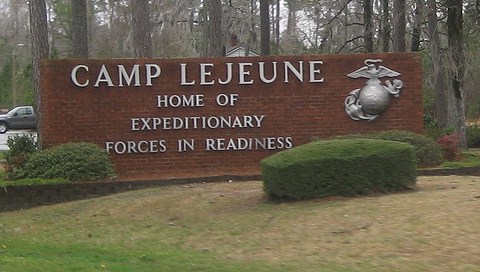
 According to an ENCToday.com story, The United States Marine Corps has taken down a document on its website that was contradictory to the real contamination that affected its water system over many years.
Its action however only comes after calls for its removal by the Agency for Toxic Substances and Disease Registry, and three North Carolina legislators, and then only after months of delay. Now, the corps says the document is only down temporarily while it is updated and revised so that it will "provide decision makers and the public with accurate and sufficient information about Camp Lejeune so that decisions that are made are informed by the science."
This story goes back a long ways and you can pick up background on it here, here, here and here. This latest news revolves around a 33-page pamphlet that went to every congress person and was then placed on the Marine's web page dedicated to the Camp Lejeune water system. The pamphlet said their were no conclusive results about the chemicals in the Camp's water and that further study wouldn't do any better. This was stated despite the fact that benzene contamination was discovered.
Some people are disappointed enough to request the corps to send mailings to all the people in the camp's water registry alerting them to the erroneous information since many of them may not be aware they were misinformed.
USMC pulls controversial water contamination booklet
Its action however only comes after calls for its removal by the Agency for Toxic Substances and Disease Registry, and three North Carolina legislators, and then only after months of delay. Now, the corps says the document is only down temporarily while it is updated and revised so that it will "provide decision makers and the public with accurate and sufficient information about Camp Lejeune so that decisions that are made are informed by the science."
This story goes back a long ways and you can pick up background on it here, here, here and here. This latest news revolves around a 33-page pamphlet that went to every congress person and was then placed on the Marine's web page dedicated to the Camp Lejeune water system. The pamphlet said their were no conclusive results about the chemicals in the Camp's water and that further study wouldn't do any better. This was stated despite the fact that benzene contamination was discovered.
Some people are disappointed enough to request the corps to send mailings to all the people in the camp's water registry alerting them to the erroneous information since many of them may not be aware they were misinformed.
Monday, October 11, 2010
Mayor To Shut Most of TX City's Fuel Stations
October 3, 2010 - Mayor Annise Parker plans to shut down two-thirds of the city's 99 fueling stations, a cost-cutting measure intended to reduce the city's potential liability for leaking contaminants.
While the closures will save the city in the long run, the process of removing underground fuel storage tanks can be expensive. The price skyrockets if underground tanks are found to be leaking fuel or oil, requiring expensive remediation to dispose of contaminated soil to safeguard surrounding neighborhoods. In some cases, monitoring wells have to be drilled to make sure the leaking fuel products have not contaminated the groundwater under the sites.
In the last three years, the city has paid private contractors $5.8 million to replace underground storage tanks at city fire and police stations, public works facilities and parks. A number of the sites where tanks had leaked had to undergo extensive soil removal and other remediation efforts, according to records obtained by the Houston Chronicle.
More...
While the closures will save the city in the long run, the process of removing underground fuel storage tanks can be expensive. The price skyrockets if underground tanks are found to be leaking fuel or oil, requiring expensive remediation to dispose of contaminated soil to safeguard surrounding neighborhoods. In some cases, monitoring wells have to be drilled to make sure the leaking fuel products have not contaminated the groundwater under the sites.
In the last three years, the city has paid private contractors $5.8 million to replace underground storage tanks at city fire and police stations, public works facilities and parks. A number of the sites where tanks had leaked had to undergo extensive soil removal and other remediation efforts, according to records obtained by the Houston Chronicle.
More...
Tuesday, September 28, 2010
Boulder, CO, Xcel Testing Downtown Groundwater For Toxic Chemicals
September 27, 2010 - Two chemicals that can lead to major health problems have been detected in the groundwater near city-owned property in downtown Boulder, prompting a monthlong study on how widespread the problem is.
Officials say they don't think the benzene and naphthalene -- common industrial agents -- are threatening the city's drinking water, but they are investigating how and when the chemicals seeped into the groundwater at 1717 15th St.
They are looking into whether the site's history as a coal gasification plant in the early 1900s, or its more recent use as a dry cleaner business, are possible causes of the contamination. Most experts are already pointing to the old gas plant as the likely culprit, which could mean the chemicals have existed underground for decades.
Regardless of the source of the potentially dangerous compounds, Xcel Energy and the city of Boulder have agreed to share the cost of a $30,000 study into the surrounding groundwater as well as the costs of a possible cleanup effort.
While the city manager first publicly acknowledged the problem in a brief memo sent Friday to the City Council, Boulder spokesman Patrick von Keyserling said the city has known about the contamination since mid-2009.
More...
Officials say they don't think the benzene and naphthalene -- common industrial agents -- are threatening the city's drinking water, but they are investigating how and when the chemicals seeped into the groundwater at 1717 15th St.
They are looking into whether the site's history as a coal gasification plant in the early 1900s, or its more recent use as a dry cleaner business, are possible causes of the contamination. Most experts are already pointing to the old gas plant as the likely culprit, which could mean the chemicals have existed underground for decades.
Regardless of the source of the potentially dangerous compounds, Xcel Energy and the city of Boulder have agreed to share the cost of a $30,000 study into the surrounding groundwater as well as the costs of a possible cleanup effort.
While the city manager first publicly acknowledged the problem in a brief memo sent Friday to the City Council, Boulder spokesman Patrick von Keyserling said the city has known about the contamination since mid-2009.
More...
IN City Finds Groundwater Contamination
September 28, 2010 - Terre Haute officials are concerned about soil and groundwater contamination recently discovered on the city’s near-north side.
Earlier this year, city officials hired an environmental consulting firm to test the soil and groundwater around a vacant lot at 301 N. 12th St., formerly the site of Chicago Towel Co., a dry-cleaning operation. The test results showed higher-than-permitted levels of tetrachloroethylene, also known as perchloroethylene or PCE, a chemical used for dry cleaning and metal degreasing.
High concentrations of PCE can cause dizziness, headache, nausea, difficulty speaking and walking and even death, according to the U.S. Department of Health and Human Services.
"This is a first for us," Pat Martin, Terre Haute City Planner, told the Terre Haute Board of Public Works and Safety at a board meeting Monday. "We don’t have a script for this."
More...
Earlier this year, city officials hired an environmental consulting firm to test the soil and groundwater around a vacant lot at 301 N. 12th St., formerly the site of Chicago Towel Co., a dry-cleaning operation. The test results showed higher-than-permitted levels of tetrachloroethylene, also known as perchloroethylene or PCE, a chemical used for dry cleaning and metal degreasing.
High concentrations of PCE can cause dizziness, headache, nausea, difficulty speaking and walking and even death, according to the U.S. Department of Health and Human Services.
"This is a first for us," Pat Martin, Terre Haute City Planner, told the Terre Haute Board of Public Works and Safety at a board meeting Monday. "We don’t have a script for this."
More...
Tuesday, September 21, 2010
Clear AZ Water Could Still Be Contaminated
September 15, 2010 - Even if tap water is clear, there is a significant chance that it could harbor dangerous — sometimes even deadly — contaminants.
Members of the Gila Watershed Partnership learned about contaminated wells and their threats to the health of people who depend on them during a Sept. 8 meeting. Kristine Uhl-man, program coordinator of the University of Arizona’s Nonpoint Education for Municipal Officials, known as NEMO, talked about several contaminants and the importance of testing private wells yearly.
Uhlman said 10 percent to 42 percent of water taps are contaminated with viruses, and 95 percent of small groundwater wells violate one or more of the nation’s drinking water standards.
There are 7,014 drinking water wells in Arizona. These are at risk of contamination from nitrates, fluoride, uranium, arsenic and other substances.
Nitrates come from several sources, including fecal matter, fertilizer and natural occurrence in the soil. The chances for well contamination in Arizona are elevated because not enough rain falls to dilute and disperse the contaminants.
More...
Members of the Gila Watershed Partnership learned about contaminated wells and their threats to the health of people who depend on them during a Sept. 8 meeting. Kristine Uhl-man, program coordinator of the University of Arizona’s Nonpoint Education for Municipal Officials, known as NEMO, talked about several contaminants and the importance of testing private wells yearly.
Uhlman said 10 percent to 42 percent of water taps are contaminated with viruses, and 95 percent of small groundwater wells violate one or more of the nation’s drinking water standards.
There are 7,014 drinking water wells in Arizona. These are at risk of contamination from nitrates, fluoride, uranium, arsenic and other substances.
Nitrates come from several sources, including fecal matter, fertilizer and natural occurrence in the soil. The chances for well contamination in Arizona are elevated because not enough rain falls to dilute and disperse the contaminants.
More...
Tuesday, September 14, 2010
U.S. EPA Settlements Require Investigation of Uranium Contamination On Southwestern Tribal Lands
September 13, 2010 - This week the U.S. Environmental Protection Agency entered into two enforcement actions, both of which will contribute towards cleaning up uranium contamination at the Navajo Nation and Hopi Reservation.
In one settlement, Rio Algom Mining LLC, a subsidiary of Canadian corporation BHP Billiton, has agreed to control releases of radium (a decay product of uranium) from the Quivira Mine Site, near Gallup, N.M. In addition, the company is to conduct a comprehensive investigation of the levels of contamination at the site. The total cost for this work is estimated to be approximately $1 million.
Under the terms of a separate settlement, the United States Department of Interior, Bureau of Indian Affairs (BIA), will begin a comprehensive investigation of the levels of uranium and other contaminants in the waste, soils and groundwater at the Tuba City Dump Site in Arizona. They will also evaluate the feasibility of a range of cleanup actions.
"Uranium mining has left a toxic legacy, and we are working as partners with the Navajo Nation, the Hopi Tribe and other federal agencies to clean up contaminated homes, mines and water supplies," said Jared Blumenfeld, Regional Administrator for EPA’s Pacific Southwest Region. "These actions are just one part of a coordinated plan that has already resulted in the replacement of 14 homes, the assessment of more than 200 mines, and funding for water systems that will serve over 3,000 people with clean water."
More...
In one settlement, Rio Algom Mining LLC, a subsidiary of Canadian corporation BHP Billiton, has agreed to control releases of radium (a decay product of uranium) from the Quivira Mine Site, near Gallup, N.M. In addition, the company is to conduct a comprehensive investigation of the levels of contamination at the site. The total cost for this work is estimated to be approximately $1 million.
Under the terms of a separate settlement, the United States Department of Interior, Bureau of Indian Affairs (BIA), will begin a comprehensive investigation of the levels of uranium and other contaminants in the waste, soils and groundwater at the Tuba City Dump Site in Arizona. They will also evaluate the feasibility of a range of cleanup actions.
"Uranium mining has left a toxic legacy, and we are working as partners with the Navajo Nation, the Hopi Tribe and other federal agencies to clean up contaminated homes, mines and water supplies," said Jared Blumenfeld, Regional Administrator for EPA’s Pacific Southwest Region. "These actions are just one part of a coordinated plan that has already resulted in the replacement of 14 homes, the assessment of more than 200 mines, and funding for water systems that will serve over 3,000 people with clean water."
More...
Owens Corning, SC Residents Discuss Contamination: Chemical Found Underneath Creek
September 13, 2010 - Owens Corning officials told a group of concerned residents Monday night a chemical found underneath a creek will not affect the drinking water at their nearby homes.
In 1988, the fiberglass products company discovered soil and groundwater had been contaminated on their property at the site of an in-ground treatment pit that was designed to neutralize acidic waste water from the manufacturing processes. At some point, the contents of that pit leaked into the surrounding soils and migrated into underlying groundwater, according to the company.
Since then, the company has worked with the United States Environmental Protection Agency and South Carolina Department of Health and Environmental Control to repeatedly monitor the water at and near the plant.
In 2009, investigators discovered contaminants moved a half mile off the plant's property about 300 to 500 feet underneath Betsy Creek, which is near dozens of homes.
More...
In 1988, the fiberglass products company discovered soil and groundwater had been contaminated on their property at the site of an in-ground treatment pit that was designed to neutralize acidic waste water from the manufacturing processes. At some point, the contents of that pit leaked into the surrounding soils and migrated into underlying groundwater, according to the company.
Since then, the company has worked with the United States Environmental Protection Agency and South Carolina Department of Health and Environmental Control to repeatedly monitor the water at and near the plant.
In 2009, investigators discovered contaminants moved a half mile off the plant's property about 300 to 500 feet underneath Betsy Creek, which is near dozens of homes.
More...
Friday, September 10, 2010
Old or Abandoned Wells Are Key Sources of TX Water Contamination
September 5, 2010 - New oil and gas drilling is probably the most visible activity people associate with threats to groundwater in Texas. But it's not usually the source of known contamination, according to state records.
Instead, old or abandoned oil and gas wells, petroleum storage facilities and even existing water wells are most frequently identified as problems.
A Texas Groundwater Protection Committee report, presented to the Legislature last year, said there were 4,729 active groundwater contamination cases documented or under enforcement in 2008.
Of those, 395, or 8.4 percent, were "attributed to oil and gas exploration and production activities," but "no producing oil and gas wells" were listed as groundwater-contamination sources, Texas Railroad Commission spokeswoman Ramona Nye said. The state has more than 281,000 oil and gas wells, Nye said.
Most contamination attributed to oil and gas exploration and production activities resulted from releases from sources such as pipelines and storage tanks, she said.
Cary Betz, chairman of the groundwater protection committee and a groundwater specialist with the Texas Commission on Environmental Quality, said the biggest source of groundwater contamination is leaking underground gasoline storage tanks at old service stations. But the number of those tanks has dropped significantly, to 1,214 in 2009, he said.
More...
Instead, old or abandoned oil and gas wells, petroleum storage facilities and even existing water wells are most frequently identified as problems.
A Texas Groundwater Protection Committee report, presented to the Legislature last year, said there were 4,729 active groundwater contamination cases documented or under enforcement in 2008.
Of those, 395, or 8.4 percent, were "attributed to oil and gas exploration and production activities," but "no producing oil and gas wells" were listed as groundwater-contamination sources, Texas Railroad Commission spokeswoman Ramona Nye said. The state has more than 281,000 oil and gas wells, Nye said.
Most contamination attributed to oil and gas exploration and production activities resulted from releases from sources such as pipelines and storage tanks, she said.
Cary Betz, chairman of the groundwater protection committee and a groundwater specialist with the Texas Commission on Environmental Quality, said the biggest source of groundwater contamination is leaking underground gasoline storage tanks at old service stations. But the number of those tanks has dropped significantly, to 1,214 in 2009, he said.
More...
Subscribe to:
Posts (Atom)