
Showing posts with label aresenic. Show all posts

Friday, December 16, 2011

Cleanup Plans Adjusted at Montana Superfund Site

By: Duane Craig

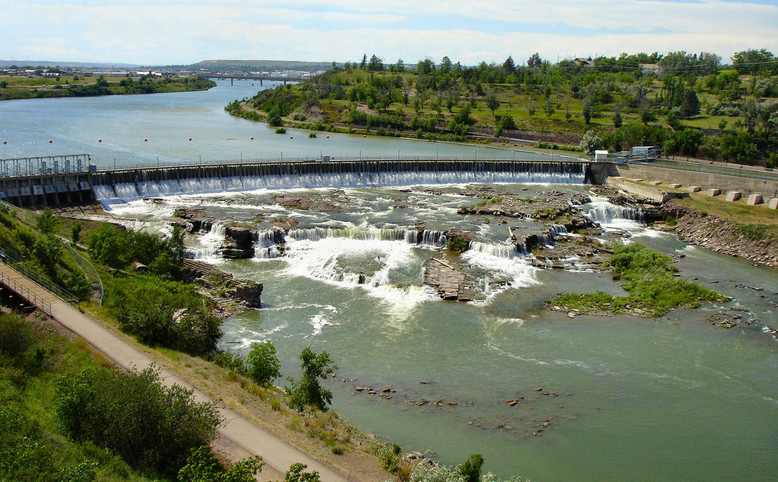
In September soils testing begins in Black Eagle, Montana, at the new Superfund site called ACM Smelter and Refinery. The site was just added to the Superfund program in March 2011.

Heavy metals found in residential properties

According to a Great Falls Tribune article heavy metals have been found in some residential yards so the testing will begin with 90 properties. The investigation will be looking for lead, arsenic and cadmium, and other heavy metals. Later on, the investigation will focus on the places where refinery operations took place, and places where waste was dumped, including the Missouri River. Great Falls is right across the Missouri River from the site.

Some cleanup related to the site was supposed to happen earlier this year but didn't because it was decided the higher priority would be cleanups where people live. The earlier planned cleanup was supposed to be along an abandoned rail line that was used to run waste down to the river for disposal. That cleanup was delayed so it wouldn't interfere with reconstruction plans for Smelter Avenue.
This site has a long and colorful history including a celebratory story about the smokestack that provided much of the soil contamination in the area. The smelter and refinery operated from 1893 to the early 1970s, according to the Environmental Protection Agency's website.

Tuesday, July 7, 2009

Texas residents blame health problems on nearby Asarco plant, landfill

July 3, 2009 - Could pollution be the cause of health problems in Sunland Park?

Many residents suspect that it is.

They consider the Asarco smelter in El Paso and the Camino Real landfill in Sunland Park to be the major sources of contamination in their community.

More . . .

Wednesday, May 20, 2009

Residential Florida Neighborhood Warned of Poor Soil Test Results

May 16, 2009 - Test results of soil just west of the Koppers wood treatment facility on N.W. 23rd Avenue show that levels of dioxin — a compound that affects immune and reproductive systems — exceed state and national standards for residential areas.

The levels of arsenic, a known carcinogen, and benzo(a)pyrene also exceeded state standards.

The Alachua County Health Department hand-delivered notices to the 20 households nearest the boundary Friday, notifying them of the contamination and warning that children should be kept away from the 20-foot right of way between the neighborhood and the industrial site where chemical levels were the highest.

More...

Wednesday, April 2, 2008

Virginia golf course built on fly ash

March 30, 2008 - What sets Battlefield Golf Club at Centerville apart, however, isn't the course's layout or water hazards; this 18-hole playground is sculpted from 1.5 million tons of "fly ash," a charcoal-gray powdery substance left behind by burning coal to make electricity.


If this were not a golf course, an industrial park or a similar venture, it would have to be regulated like a landfill. But because of a provision in the environmental regulations encouraging the "beneficial use" of fly ash, it's considered a "coal combustion byproduct" project instead of an industrial waste landfill.


The ash for Battlefield Golf Club came from a Dominion Virginia Power coal-burning plant 20 miles west in Deep Creek. Monitoring wells at the plant's fly-ash landfill have shown that unacceptably high levels of arsenic leached into groundwater. Arsenic, one of a number of heavy metals found in fly ash, has been linked to cancer, according to the U.S. Environmental Protection Agency.


Seven years ago, homeowners near the golf course knew fly ash posed a threat to water quality and voiced their concerns to developers in community meetings.


Wednesday, October 17, 2007

Residents of toxic neighborhood in Rhode Island wait and wait

October 16, 2007 - Gail Corvello figured that if she and her neighbors held out for about five years, they would be able to get out from under the nightmare of the soil contamination in the Bay Street neighborhood that has had a stranglehold on their lives since 2002.

She was wrong.

More . . .